Description
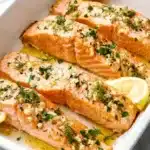
This Best Baked Salmon recipe combines tender salmon fillets with melted butter, fresh lemon juice, garlic, parsley, and dill. Ready in just 20 minutes, this easy oven-baked salmon makes a delicious family dinner with moist, flaky fish and bright citrus flavor.
Ingredients
- 4 salmon fillets (6 ounces / 170 g each)`,
- `2 tablespoons butter, melted`,
- `1/2 tablespoon fresh lemon juice`,
- `3 garlic cloves, minced`,
- `Kosher salt, to taste`,
- `Freshly ground black pepper, to taste`,
- `1 teaspoon fresh parsley, finely chopped`,
- `1 teaspoon fresh dill, finely chopped`,
- `Additional lemon slices or wedges for garnish (optional)
Instructions
- Preheat the oven to 375°F (190°C). Take the salmon out of the refrigerator approximately 15 minutes before cooking to allow it to warm slightly for more even baking.`,
- `Combine the melted butter and fresh lemon juice in a small mixing bowl. Stir until the ingredients blend together.`,
- `Arrange the salmon fillets in a baking dish, leaving a little space between each piece. Use a pastry brush to coat each fillet evenly with the lemon butter mixture.`,
- `Sprinkle the minced garlic evenly over the salmon fillets. Season each piece with kosher salt and freshly ground black pepper.`,
- `Place the baking dish in the preheated oven and bake for 12 to 15 minutes, depending on the thickness of the salmon. Check the thickest part with a food thermometer. The USDA recommends an internal temperature of 145°F (63°C).`,
- `Remove the salmon from the oven. Sprinkle freshly chopped parsley and dill over the fillets. Add lemon slices or wedges if desired, and serve immediately.
Notes
Oven temperature: Bake salmon at 375°F (190°C) for gentle, even cooking that helps preserve moisture.
Baking times: Regular salmon fillets typically require 12 to 13 minutes. Thicker fillets may need 13 to 15 minutes, while a whole side of salmon may need approximately 15 to 20 minutes or longer.
Salmon selection: Choose brightly colored, firm, well-marbled salmon. King, sockeye, and coho salmon all work well. Wild-caught salmon and properly frozen salmon are excellent options.
Skin-on salmon: Keep the skin attached during baking to help protect the delicate flesh. Remove the skin after cooking if preferred.
Safe temperature: The USDA recommends cooking salmon to 145°F (63°C). Some recipes suggest 125 to 130°F (52 to 54°C) for a softer texture, but those temperatures fall below USDA guidance.
White protein: The white substance that sometimes appears on baked salmon is albumin, a natural protein. It is harmless, and gentler cooking can reduce its appearance.
Butter alternatives: Replace melted butter with olive oil for a dairy-free option, or use ghee if preferred.
Fresh herbs: Parsley and dill add a fresh herbal finish. You can also try thyme or chives.
Frozen salmon: Thaw frozen salmon overnight in the refrigerator. Alternatively, follow package instructions for thawing in cold water. Remove vacuum packaging before thawing when the manufacturer instructs you to do so.
Serving suggestions: Serve with rice, mashed potatoes, roasted potatoes, asparagus, green beans, Brussels sprouts, salads, or Mediterranean grain bowls.
Refrigeration: Let leftovers cool briefly, transfer them to an airtight container, and refrigerate promptly for up to 3 to 4 days.
Freezing: Store cooked salmon in a freezer-safe airtight container for up to 3 months for the best quality. Place parchment paper between portions to prevent sticking.
Reheating: Warm leftover salmon gently in a 275°F (135°C) oven, checking after approximately 10 minutes. Continue until the internal temperature reaches 165°F (74°C). Alternatively, microwave in short intervals.
Leftover ideas: Use leftover salmon in fresh salads, salmon patties, rice bowls, or grain bowls.
Timing note: The 20-minute total excludes the optional 15-minute period for taking the chill off refrigerated salmon.
Nutrition note: Nutritional values are estimates per serving and may vary depending on the salmon variety, butter, and seasoning.