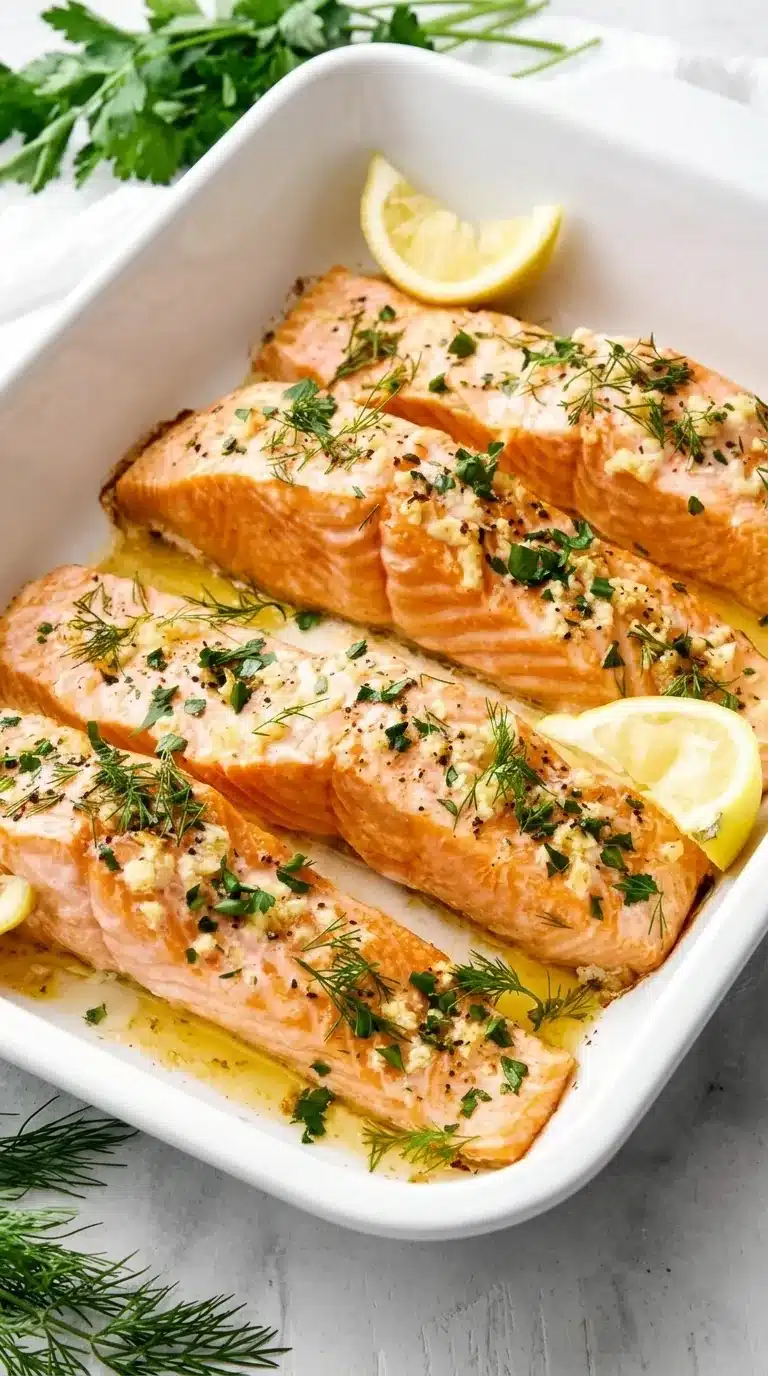
This Best Baked Salmon recipe brings the comforting smell of garlic, melted butter, and fresh lemon straight into your kitchen. The salmon comes out tender, moist, and beautifully flaky with very little work. Plus, you only need 20 minutes to put a fresh, flavorful seafood dinner on the table, even on your busiest evenings.
Table of Contents
Why You’ll Love This Baked Salmon Recipe
The Best Baked Salmon proves that simple ingredients can create incredible flavor. The buttery lemon sauce keeps each fillet moist, while garlic and fresh herbs add a wonderful aroma.
Plus, this recipe makes weeknight cooking easier. You don’t need fancy equipment or complicated techniques.
You can also serve this salmon with vegetables, rice, or potatoes. As a result, it works beautifully for family dinners and weekly meal preparation.
Recipe details:
- Prep time: 5 minutes
- Cook time: 15 minutes
- Total time: 20 minutes
- Servings: 4
- Serving size: 1 salmon fillet (6 ounces)
- Oven temperature: 375°F (190°C)
- Equipment: Baking dish, small bowl, and pastry brush
Ingredients for the Best Baked Salmon
You only need a few fresh ingredients to make this delicious lemon garlic salmon.
- 4 salmon fillets (6 ounces / 170 g each)
- 2 tablespoons butter, melted
- ½ tablespoon fresh lemon juice
- 3 garlic cloves, minced
- Kosher salt, to taste
- Freshly ground black pepper, to taste
- 1 teaspoon fresh parsley, finely chopped
- 1 teaspoon fresh dill, finely chopped
- Fresh lemon slices or wedges, optional
How to Choose the Best Salmon Fillets
Start with salmon that has bright color, firm flesh, and beautiful natural marbling. King salmon offers a rich texture, while sockeye and coho bring a slightly stronger seafood flavor.
I also like wild-caught salmon when I can find it. However, good-quality frozen salmon works wonderfully, especially when you thaw it properly.
Ingredient Substitutions and Variations
You can replace butter with olive oil or ghee. For a dairy-free dinner, choose olive oil.
Meanwhile, fresh thyme or chives can replace parsley and dill. You can also add a little lemon zest for a brighter citrus flavor.

How to Make the Best Baked Salmon
Making the Best Baked Salmon takes just five simple steps. First, gather your ingredients and grab a baking dish.
Step 1: Preheat the Oven and Prepare the Salmon
First, preheat your oven to 375°F (190°C).
Next, take the salmon out of the refrigerator about 15 minutes before cooking. This short resting period helps the fish warm slightly.
Then, arrange the fillets in your baking dish, leaving space between each piece.
Step 2: Make the Lemon Butter Sauce
Next, combine the melted butter and fresh lemon juice in a small bowl.
Stir until the mixture comes together. Then, brush the sauce evenly over each salmon fillet.
Step 3: Season the Salmon with Garlic, Salt, and Pepper
Sprinkle the minced garlic over the salmon.
Afterward, add kosher salt and freshly ground black pepper. Make sure each fillet gets a little garlic for balanced flavor.
Step 4: Bake the Salmon Until Tender and Flaky
Place the baking dish inside your hot oven.
Bake for 12 to 15 minutes, depending on thickness. Meanwhile, watch the salmon carefully during the final minutes.
The fish should turn opaque and separate easily into tender flakes. For food safety, the USDA recommends cooking salmon to an internal temperature of 145°F (63°C).
Step 5: Garnish with Fresh Herbs and Serve
Finally, remove the salmon from the oven.
Sprinkle fresh parsley and dill over each fillet. Then, add lemon wedges and serve while everything tastes warm and buttery.
How Long to Bake Salmon at 375°F
The Best Baked Salmon cooks beautifully at 375°F because this moderate temperature helps control moisture loss.
However, cooking time changes depending on the thickness and size of your salmon.
Baking Time for Individual Salmon Fillets
Most regular salmon fillets need approximately 12 to 13 minutes at 375°F.
However, thicker portions may need additional time. Always check the thickest section with a food thermometer.
Baking Time for Thick Fillets and Whole Salmon
Thick salmon fillets generally need 13 to 15 minutes.
Meanwhile, a whole side of salmon may require 15 to 20 minutes or longer, depending on thickness. Therefore, use temperature rather than time alone to judge doneness.
How to Tell When Baked Salmon Is Done
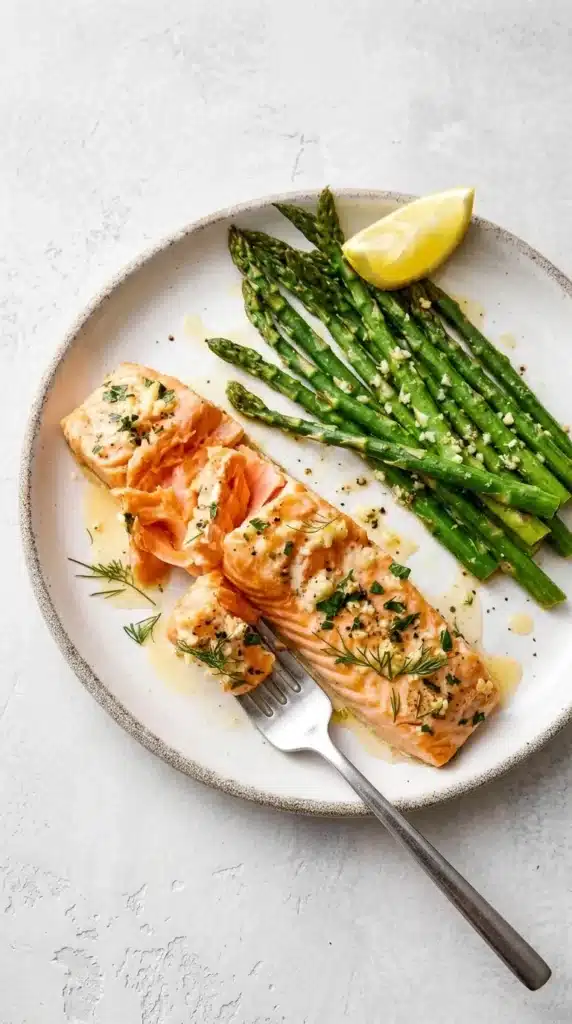
Perfectly cooked salmon has a tender texture and separates into flakes when you gently press it with a fork.
You may see recommendations for 125°F to 130°F for a softer, moist center. However, that range falls below the USDA’s recommended safe temperature of 145°F (63°C).
For the safest result, insert a food thermometer into the thickest part and cook until it reaches 145°F.
Expert Tips for Moist and Flaky Baked Salmon
A few simple habits make the Best Baked Salmon even more enjoyable.
First, leave the skin on while baking. The skin helps protect the delicate flesh from direct heat.
Next, avoid overcrowding your baking dish. Space allows the heat to circulate around each portion.
Also, use fresh lemon juice whenever possible. Its bright flavor balances the richness of the butter.
Finally, start checking your salmon early. Since thin fillets cook quickly, a few extra minutes can change the texture.
What to Serve with Baked Salmon
The buttery garlic flavor pairs beautifully with fresh vegetables, fluffy grains, and comforting potatoes.
Easy Side Dishes for Baked Salmon
For a simple dinner, serve your salmon with roasted asparagus, green beans, or Brussels sprouts.
Alternatively, add mashed potatoes or roasted potatoes. Their soft, comforting texture works wonderfully with the lemon butter sauce.
Healthy Salads and Grain Bowl Ideas
For a lighter meal, serve salmon over leafy greens, cucumbers, tomatoes, and avocado.
You can also build a Mediterranean grain bowl with rice, lentils, cabbage, and a spoonful of tzatziki.
As a result, you get a fresh, colorful meal with plenty of satisfying flavors.
How to Store and Reheat Baked Salmon
The Best Baked Salmon also works well for meal preparation. However, proper storage helps preserve its flavor and texture.
How to Store Leftover Salmon in the Refrigerator
Let the salmon cool briefly, then transfer it to an airtight container.
Refrigerate promptly and enjoy within 3 to 4 days. Avoid leaving cooked fish at room temperature for more than two hours.
Can You Freeze Cooked Salmon?
Yes! Place cooled salmon portions in an airtight, freezer-safe container.
Next, separate the pieces with parchment paper to prevent sticking. For the best quality, enjoy the frozen salmon within three months.
How to Reheat Salmon Without Drying It Out
For gentle reheating, place the salmon in a baking dish and cover it loosely with foil.
Then, warm it in a 275°F (135°C) oven, checking after approximately 10 minutes. Continue until it heats through to 165°F (74°C).
Alternatively, microwave it in short intervals. You can also enjoy chilled leftover salmon in salads or grain bowls.
Frequently Asked Questions About Baked Salmon
Is It Better to Bake Salmon Covered or Uncovered?
Bake salmon uncovered when you want a simple, flavorful finish. However, covering it loosely with foil can help retain moisture, especially with thicker portions.
Should You Leave the Skin on Salmon When Baking?
Yes, keeping the skin attached helps protect the flesh during baking. Plus, you can easily separate the salmon from its skin after cooking.
Can You Bake Salmon from Frozen?
Yes, although frozen salmon usually needs extra cooking time. For more even results, thaw it overnight in the refrigerator.
Alternatively, thaw sealed salmon in cold water, following the package’s food safety instructions. Remove any vacuum packaging before thawing when the manufacturer directs you to do so.
What Is the White Stuff That Comes Out of Baked Salmon?
That white substance is albumin, a natural protein inside the fish. As the salmon heats, the protein firms up and appears on the surface.
Fortunately, albumin is harmless. Gentle baking can also reduce how much appears.
More Such Recipes
If you enjoy the Best Baked Salmon, try these delicious recipes for your next seafood dinner or fresh side dish.
- Easy baked teriyaki salmon with a sweet and savory glaze brings a delicious Asian-inspired flavor to your dinner table.
- One-skillet salmon with creamy lemon orzo makes a comforting meal with fewer dishes.
- Quick and easy air fryer salmon with Dijon mustard offers another simple way to cook tender salmon.
- Fresh salmon salad with creamy lemon Dijon dressing makes a refreshing lunch or light dinner.
- Fresh chopped asparagus salad with lemon dressing adds a crisp, refreshing side to your seafood meal.
- Fluffy cilantro lime rice to serve with baked salmon pairs beautifully with buttery garlic and lemon flavors.
Final Thoughts
The Best Baked Salmon brings together everything I love about simple home cooking: fresh ingredients, comforting flavor, and very little cleanup.
Plus, the combination of butter, lemon, garlic, and herbs makes every bite tender and satisfying.
Whether you’re making a quick family dinner or preparing lunches for the week, this salmon deserves a spot in your regular meal rotation.
For more seafood inspiration, follow Kai Recipes on Pinterest or join our kitchen community on Facebook.
Best Baked Salmon Recipe (Easy Lemon Garlic Butter Salmon)
Description
This Best Baked Salmon recipe combines tender salmon fillets with melted butter, fresh lemon juice, garlic, parsley, and dill. Ready in just 20 minutes, this easy oven-baked salmon makes a delicious family dinner with moist, flaky fish and bright citrus flavor.
Ingredients
- 4 salmon fillets (6 ounces / 170 g each)`,
- `2 tablespoons butter, melted`,
- `1/2 tablespoon fresh lemon juice`,
- `3 garlic cloves, minced`,
- `Kosher salt, to taste`,
- `Freshly ground black pepper, to taste`,
- `1 teaspoon fresh parsley, finely chopped`,
- `1 teaspoon fresh dill, finely chopped`,
- `Additional lemon slices or wedges for garnish (optional)
Instructions
- Preheat the oven to 375°F (190°C). Take the salmon out of the refrigerator approximately 15 minutes before cooking to allow it to warm slightly for more even baking.`,
- `Combine the melted butter and fresh lemon juice in a small mixing bowl. Stir until the ingredients blend together.`,
- `Arrange the salmon fillets in a baking dish, leaving a little space between each piece. Use a pastry brush to coat each fillet evenly with the lemon butter mixture.`,
- `Sprinkle the minced garlic evenly over the salmon fillets. Season each piece with kosher salt and freshly ground black pepper.`,
- `Place the baking dish in the preheated oven and bake for 12 to 15 minutes, depending on the thickness of the salmon. Check the thickest part with a food thermometer. The USDA recommends an internal temperature of 145°F (63°C).`,
- `Remove the salmon from the oven. Sprinkle freshly chopped parsley and dill over the fillets. Add lemon slices or wedges if desired, and serve immediately.
Notes
Oven temperature: Bake salmon at 375°F (190°C) for gentle, even cooking that helps preserve moisture.
Baking times: Regular salmon fillets typically require 12 to 13 minutes. Thicker fillets may need 13 to 15 minutes, while a whole side of salmon may need approximately 15 to 20 minutes or longer.
Salmon selection: Choose brightly colored, firm, well-marbled salmon. King, sockeye, and coho salmon all work well. Wild-caught salmon and properly frozen salmon are excellent options.
Skin-on salmon: Keep the skin attached during baking to help protect the delicate flesh. Remove the skin after cooking if preferred.
Safe temperature: The USDA recommends cooking salmon to 145°F (63°C). Some recipes suggest 125 to 130°F (52 to 54°C) for a softer texture, but those temperatures fall below USDA guidance.
White protein: The white substance that sometimes appears on baked salmon is albumin, a natural protein. It is harmless, and gentler cooking can reduce its appearance.
Butter alternatives: Replace melted butter with olive oil for a dairy-free option, or use ghee if preferred.
Fresh herbs: Parsley and dill add a fresh herbal finish. You can also try thyme or chives.
Frozen salmon: Thaw frozen salmon overnight in the refrigerator. Alternatively, follow package instructions for thawing in cold water. Remove vacuum packaging before thawing when the manufacturer instructs you to do so.
Serving suggestions: Serve with rice, mashed potatoes, roasted potatoes, asparagus, green beans, Brussels sprouts, salads, or Mediterranean grain bowls.
Refrigeration: Let leftovers cool briefly, transfer them to an airtight container, and refrigerate promptly for up to 3 to 4 days.
Freezing: Store cooked salmon in a freezer-safe airtight container for up to 3 months for the best quality. Place parchment paper between portions to prevent sticking.
Reheating: Warm leftover salmon gently in a 275°F (135°C) oven, checking after approximately 10 minutes. Continue until the internal temperature reaches 165°F (74°C). Alternatively, microwave in short intervals.
Leftover ideas: Use leftover salmon in fresh salads, salmon patties, rice bowls, or grain bowls.
Timing note: The 20-minute total excludes the optional 15-minute period for taking the chill off refrigerated salmon.
Nutrition note: Nutritional values are estimates per serving and may vary depending on the salmon variety, butter, and seasoning.