Description
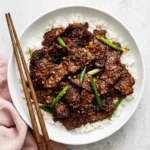
Make tender, restaurant-style Mongolian Beef at home in just 35 minutes. Thinly sliced flank steak cooks quickly and gets coated in a rich, sticky garlic ginger sauce. This easy Chinese-American-inspired dinner delivers sweet and savory flavor without marinating.
Ingredients
- For the Mongolian Beef:
- 2 tablespoons avocado oil or another high-heat cooking oil
- 1 pound (454 g) flank steak
- 1/4 cup cornstarch
- 3 green onions, thinly sliced diagonally
- For the Sauce:
- 1/2 cup tamari soy sauce
- 1/3 cup coconut sugar
- 1/4 cup water
- 2 teaspoons sesame oil
- 1 teaspoon blackstrap molasses
- 1 teaspoon fresh ginger, minced
- 4 garlic cloves, finely chopped
Instructions
- In a medium bowl, combine tamari soy sauce, coconut sugar, water, sesame oil, blackstrap molasses, minced ginger, and chopped garlic. Stir thoroughly until combined, then set the sauce aside.
- Cut the flank steak lengthwise into two sections. Slice each section thinly against the grain to help keep the meat tender.
- Place the beef strips in a bowl and coat evenly with cornstarch. Shake off excess starch and transfer the beef to a plate.
- Heat avocado oil in a wok or large skillet over medium-high heat. Sear the beef in small batches for approximately 30 to 60 seconds per side until browned. Transfer each batch to a plate, adding more oil if necessary.
- Reduce the heat to medium. Pour the prepared sauce into the skillet and simmer gently for 4 to 5 minutes, stirring occasionally, until it starts to thicken.
- Return the browned beef to the skillet. Toss until the sauce coats every piece. Cook for another 1 to 2 minutes until the sauce becomes a thick, glossy glaze and the beef cooks through.
- Add the sliced green onions and stir briefly. Serve immediately over steamed rice or your favorite noodles.`,
- notes: `Slice the steak against the grain for the most tender texture.
- Cook the beef in small batches to develop browned, lightly crispy edges instead of steaming the meat.
- No overnight marinating, brining, or traditional meat velveting is necessary.
- The cornstarch coating helps create a lightly crisp exterior and naturally thickens the sauce. Avoid adding extra cornstarch to the sauce.
- For a spicy version, add crushed red pepper flakes before serving.
- Replace coconut sugar and molasses with approximately 1/4 cup packed brown sugar as a starting point.
- Use gluten-free tamari and serve with rice or gluten-free noodles for a gluten-free meal.
- Sirloin or skirt steak can replace flank steak.
- Low-sodium soy sauce can help reduce saltiness. Coconut aminos also work, although they change the flavor.
- Arrowroot powder can replace cornstarch, but high heat may give it a gummy texture.
- Regular sesame oil works well in this recipe.
- Use a carbon-steel wok, cast-iron skillet, or stainless-steel skillet. Avoid nonstick cookware at very high temperatures.
- For extra vegetables, saute sliced red bell peppers with garlic and sesame oil before combining them with the beef and sauce.
- Serve with steamed white rice, ginger rice, fried rice, ramen, lo mein, chow mein, or rice noodles.
- Pair with garlic green beans, bok choy, roasted broccoli, sauteed cabbage, cucumber salad, or sesame-miso slaw.
- Refrigerate cooled leftovers in an airtight container for 3 to 4 days.
- Freeze cooled leftovers in individual freezer-safe containers for up to 3 months.
- Thaw frozen leftovers overnight in the refrigerator. Reheat gently in a skillet with a splash of water until hot.
Notes
Slice the steak against the grain for the most tender texture.
Cook the beef in small batches to develop browned, lightly crispy edges instead of steaming the meat.
No overnight marinating, brining, or traditional meat velveting is necessary.
The cornstarch coating helps create a lightly crisp exterior and naturally thickens the sauce. Avoid adding extra cornstarch to the sauce.
For a spicy version, add crushed red pepper flakes before serving.
Replace coconut sugar and molasses with approximately 1/4 cup packed brown sugar as a starting point.
Use gluten-free tamari and serve with rice or gluten-free noodles for a gluten-free meal.
Sirloin or skirt steak can replace flank steak.
Low-sodium soy sauce can help reduce saltiness. Coconut aminos also work, although they change the flavor.
Arrowroot powder can replace cornstarch, but high heat may give it a gummy texture.
Regular sesame oil works well in this recipe.
Use a carbon-steel wok, cast-iron skillet, or stainless-steel skillet. Avoid nonstick cookware at very high temperatures.
For extra vegetables, saute sliced red bell peppers with garlic and sesame oil before combining them with the beef and sauce.
Serve with steamed white rice, ginger rice, fried rice, ramen, lo mein, chow mein, or rice noodles.
Pair with garlic green beans, bok choy, roasted broccoli, sauteed cabbage, cucumber salad, or sesame-miso slaw.
Refrigerate cooled leftovers in an airtight container for 3 to 4 days.
Freeze cooled leftovers in individual freezer-safe containers for up to 3 months.
Thaw frozen leftovers overnight in the refrigerator. Reheat gently in a skillet with a splash of water until hot.