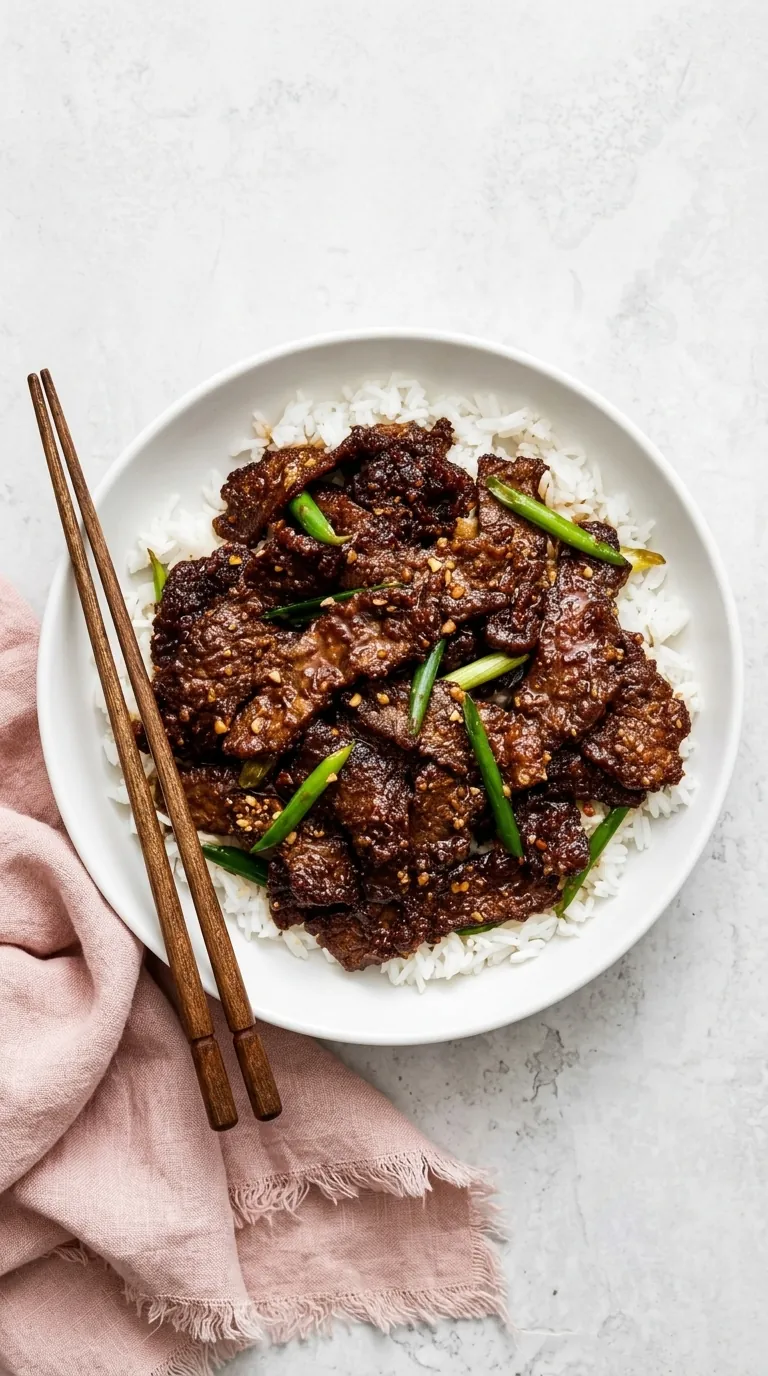
Mongolian Beef brings that cozy restaurant dinner feeling straight into your kitchen. Picture tender strips of steak sizzling in a hot skillet while garlic and ginger fill the air. Then comes the rich, glossy sauce that clings to every bite. Best of all, you can make this satisfying dinner in just 35 minutes.
Make tender, restaurant-style Mongolian beef at home in just 35 minutes. This easy dinner recipe features thinly sliced flank steak coated in a sticky, savory-sweet garlic ginger sauce. No marinating is needed, making it perfect for busy weeknights.
Table of Contents
Why You’ll Love This Mongolian Beef Recipe
Some evenings call for something hearty without spending hours cooking. Luckily, this Mongolian Beef recipe delivers bold flavor with very little effort.
First, the cornstarch gives the steak lightly crisp edges. Meanwhile, the garlic, ginger, tamari, and coconut sugar create a rich sauce that tastes similar to P.F. Chang’s restaurant-style beef.
Plus, you only need one skillet and a few everyday ingredients. There is no overnight marinade or complicated preparation.
Recipe details:
- Prep time: 20 minutes
- Cook time: 15 minutes
- Total time: 35 minutes
- Servings: 4
- Calories: 339 kcal per serving
- Cooking method: Stovetop stir-fry
- Category: Dinner recipes

Ingredients for Mongolian Beef
You only need a handful of ingredients to create that wonderful balance of savory, sweet, and aromatic flavors.
Ingredients for the Beef
- 2 tablespoons avocado oil or another high-heat cooking oil
- 1 pound (454 g) flank steak
- 1/4 cup cornstarch
- 3 green onions, thinly sliced diagonally
Flank steak works beautifully because it cooks quickly and stays tender when you slice it correctly. Also, cornstarch helps develop those delicious browned edges.
Ingredients for the Mongolian Beef Sauce
- 1/2 cup tamari soy sauce
- 1/3 cup coconut sugar
- 1/4 cup water
- 2 teaspoons sesame oil
- 1 teaspoon blackstrap molasses
- 1 teaspoon fresh ginger, minced
- 4 garlic cloves, finely chopped
Together, these ingredients create the signature Mongolian Beef sauce. The tamari adds savory depth, while coconut sugar and molasses bring sweetness and a darker color.
Meanwhile, fresh ginger and garlic add warmth, and sesame oil contributes a gentle nutty aroma.
Ingredient Substitutions and Variations
If you cannot find flank steak, try sirloin or skirt steak. Both work well with quick cooking.
Additionally, you can replace coconut sugar and molasses with approximately 1/4 cup packed brown sugar.
For a less salty sauce, choose low-sodium soy sauce. Alternatively, coconut aminos offer another option, although they change the flavor.
You can also replace cornstarch with arrowroot powder. However, avoid overheating arrowroot because it may turn gummy.
How to Make Mongolian Beef
This Mongolian Beef recipe comes together quickly, so prepare everything before heating your skillet.
Step 1: Prepare the Mongolian Beef Sauce
First, combine tamari, coconut sugar, water, sesame oil, molasses, ginger, and garlic in a medium bowl.
Next, whisk until the sugar dissolves and the ingredients combine. Then set the sauce aside while you prepare the steak.
Step 2: Slice and Coat the Flank Steak
Cut the flank steak lengthwise into two sections. Next, slice each section thinly against the grain.
Then place the beef strips in a bowl and sprinkle cornstarch over them. Toss gently until each piece has a light coating.
Finally, shake away excess starch and transfer the beef to a plate.
Step 3: Sear the Beef Until Golden Brown
Heat avocado oil in a wok or large skillet over medium-high heat.
Next, add the steak in small batches. Cook each side for approximately 30 to 60 seconds until the edges turn brown.
Then transfer the beef to a clean plate. Add a little more oil between batches when necessary.
Step 4: Simmer the Sauce Until Thickened
Reduce the heat to medium and pour the prepared sauce into the skillet.
Next, let it bubble gently for 4 to 5 minutes. Stir occasionally as the sauce thickens and develops a rich, glossy appearance.
Step 5: Toss the Beef in the Sauce and Garnish
Return the browned steak to the skillet and toss until the sauce coats every piece.
Then cook for another 1 to 2 minutes, until the glaze turns sticky and the beef cooks through.
Finally, stir in the green onions and serve your Mongolian Beef immediately.
Nutrition per serving: 339 calories, 24 g carbohydrates, 28 g protein, 15 g fat, 3 g saturated fat, 2 g polyunsaturated fat, 8 g monounsaturated fat, 68 mg cholesterol, 1,710 mg sodium, 513 mg potassium, 1 g fiber, 11 g sugar, 90 IU vitamin A, 3 mg vitamin C, 46 mg calcium, and 3 mg iron.
Tips for Tender, Restaurant-Style Mongolian Beef
A few simple techniques make a noticeable difference in the final texture.
Slice the Beef Against the Grain
Look for the long muscle fibers running through your steak. Then cut across those lines rather than following them.
As a result, each strip feels more tender when you bite into it.
Cook in Small Batches for Crispy Edges
Avoid filling the skillet with too much beef at once. Otherwise, the meat releases moisture and steams instead of browning.
Also, choose a carbon-steel wok, cast-iron skillet, or stainless-steel pan. Avoid using nonstick cookware over very high heat.
Get the Perfect Sticky Sauce Without Extra Cornstarch
The cornstarch coating already helps thicken the Mongolian Beef sauce.
Therefore, skip adding extra cornstarch directly to the liquid. Instead, let the sauce simmer until it naturally reduces into a shiny glaze.
Easy Mongolian Beef Variations
Once you know the basic recipe, you can adjust the flavors to suit your dinner plans.
Spicy Mongolian Beef
For extra heat, sprinkle crushed red pepper flakes over the finished dish.
Alternatively, add a small amount of chili flakes to the sauce while it simmers.
Mongolian Beef With Vegetables
Add thinly sliced red bell peppers for sweetness and crunch.
First, sauté them with a little garlic and sesame oil. Then combine them with the beef and sauce.
Gluten-Free Mongolian Beef
Choose certified gluten-free tamari instead of conventional soy sauce.
Also, serve the beef with steamed rice or gluten-free noodles for a satisfying meal.
What to Serve With Mongolian Beef
The rich sauce tastes especially good with simple sides that soak up its savory flavor.
Best Rice and Noodle Pairings
Steamed white rice makes a wonderful choice because its mild flavor balances the sweet sauce.
However, ginger rice, fried rice, ramen, lo mein, chow mein, and rice noodles also pair beautifully with Mongolian Beef.
Easy Vegetable Sides
For something fresh, try garlic green beans, sautéed bok choy, or roasted broccoli.
Meanwhile, sautéed cabbage adds a lovely crunch. An Asian cucumber salad with chili oil or sesame-miso slaw also balances the rich beef.
How to Store and Reheat Mongolian Beef
Leftovers make a convenient lunch, especially when you pair them with fresh rice.
Storing Leftovers in the Refrigerator
First, let the beef cool completely. Then transfer it into an airtight container.
Refrigerate for 3 to 4 days, and keep the sauce with the meat to maintain moisture.
Freezing Mongolian Beef
Divide the cooled beef into individual portions and place them in freezer-safe containers.
Then freeze for up to 3 months. For the best texture, thaw overnight in the refrigerator before reheating.
Reheating Without Drying Out the Beef
Warm the leftovers in a skillet over medium-low heat.
Next, add a splash of water to loosen the sauce. Stir gently until the beef heats through.
Avoid cooking too long because the steak can become chewy.
Frequently Asked Questions About Mongolian Beef
What is Mongolian beef sauce made of?
Mongolian beef sauce combines soy sauce, sugar, garlic, ginger, sesame oil, and water. This recipe also includes blackstrap molasses for deeper flavor and a darker glaze.
What is special about Mongolian beef?
Mongolian Beef stands out for its tender steak, lightly crisp edges, and glossy sweet-savory sauce. Also, the quick cooking method creates restaurant-style flavor without marinating.
What is Mongolian beef on a Chinese menu?
Mongolian beef is a Chinese-American-inspired stir-fry that typically features sliced beef, green onions, and a savory brown sauce. Despite its name, it does not come from traditional Mongolian cuisine.
How to make Mongolian beef?
First, slice flank steak against the grain and coat it with cornstarch. Next, sear the beef in batches. Then simmer the garlic ginger sauce, return the steak to the skillet, and toss until glossy. Finally, add green onions and serve.
More Such Recipes
If you enjoy Mongolian Beef, these comforting dinner recipes bring more delicious flavors to your table.
- Try this easy Chinese-style fried rice to serve with Mongolian beef for a flavorful side that soaks up the sauce.
- Make this Chinese beef and broccoli stir-fry with savory garlic ginger sauce for another quick dinner.
- Enjoy this crispy chilli beef with a sweet and spicy sticky glaze when you crave extra crunch and heat.
- Prepare this quick beef stir-fry with honey pepper sauce for a different sweet and savory combination.
- Try this tender slow cooker pepper steak with bell peppers and soy sauce for an easy, comforting meal.
- Make this slow cooker beef stroganoff with garlic butter mushrooms when you want a rich, cozy dinner.
Final Thoughts
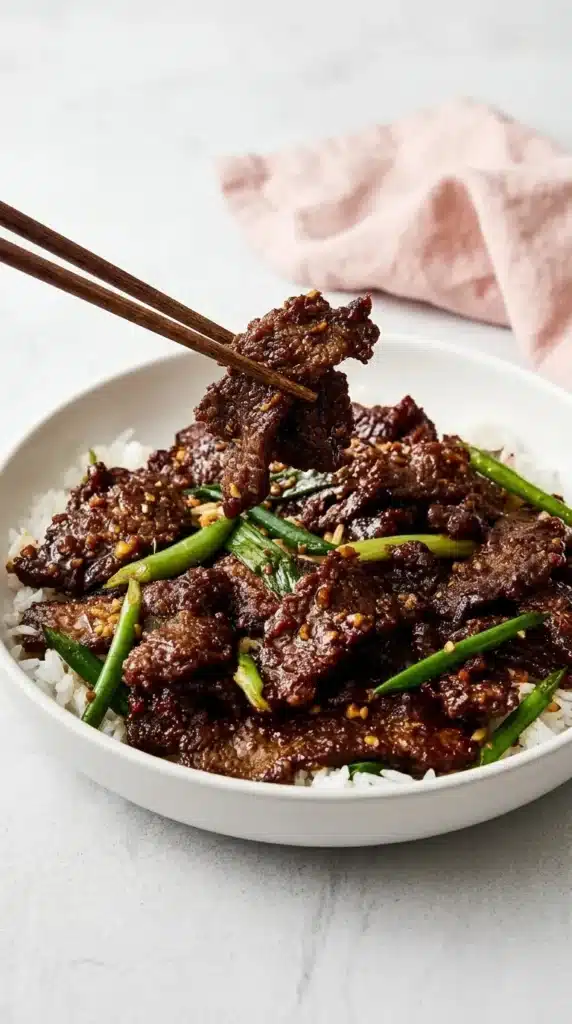
Mongolian Beef proves that a satisfying restaurant-style dinner does not require complicated ingredients or hours in the kitchen. With tender steak, fragrant garlic, fresh ginger, and a glossy sauce, every bite brings something delicious.
So, grab your skillet, cook some rice, and enjoy a warm homemade dinner.
For more everyday cooking inspiration, follow Kai Recipes on Pinterest and Facebook.
Print
Mongolian Beef Recipe : Easy Restaurant-Style Dinner
Description
Make tender, restaurant-style Mongolian Beef at home in just 35 minutes. Thinly sliced flank steak cooks quickly and gets coated in a rich, sticky garlic ginger sauce. This easy Chinese-American-inspired dinner delivers sweet and savory flavor without marinating.
Ingredients
- For the Mongolian Beef:
- 2 tablespoons avocado oil or another high-heat cooking oil
- 1 pound (454 g) flank steak
- 1/4 cup cornstarch
- 3 green onions, thinly sliced diagonally
- For the Sauce:
- 1/2 cup tamari soy sauce
- 1/3 cup coconut sugar
- 1/4 cup water
- 2 teaspoons sesame oil
- 1 teaspoon blackstrap molasses
- 1 teaspoon fresh ginger, minced
- 4 garlic cloves, finely chopped
Instructions
- In a medium bowl, combine tamari soy sauce, coconut sugar, water, sesame oil, blackstrap molasses, minced ginger, and chopped garlic. Stir thoroughly until combined, then set the sauce aside.
- Cut the flank steak lengthwise into two sections. Slice each section thinly against the grain to help keep the meat tender.
- Place the beef strips in a bowl and coat evenly with cornstarch. Shake off excess starch and transfer the beef to a plate.
- Heat avocado oil in a wok or large skillet over medium-high heat. Sear the beef in small batches for approximately 30 to 60 seconds per side until browned. Transfer each batch to a plate, adding more oil if necessary.
- Reduce the heat to medium. Pour the prepared sauce into the skillet and simmer gently for 4 to 5 minutes, stirring occasionally, until it starts to thicken.
- Return the browned beef to the skillet. Toss until the sauce coats every piece. Cook for another 1 to 2 minutes until the sauce becomes a thick, glossy glaze and the beef cooks through.
- Add the sliced green onions and stir briefly. Serve immediately over steamed rice or your favorite noodles.`,
- notes: `Slice the steak against the grain for the most tender texture.
- Cook the beef in small batches to develop browned, lightly crispy edges instead of steaming the meat.
- No overnight marinating, brining, or traditional meat velveting is necessary.
- The cornstarch coating helps create a lightly crisp exterior and naturally thickens the sauce. Avoid adding extra cornstarch to the sauce.
- For a spicy version, add crushed red pepper flakes before serving.
- Replace coconut sugar and molasses with approximately 1/4 cup packed brown sugar as a starting point.
- Use gluten-free tamari and serve with rice or gluten-free noodles for a gluten-free meal.
- Sirloin or skirt steak can replace flank steak.
- Low-sodium soy sauce can help reduce saltiness. Coconut aminos also work, although they change the flavor.
- Arrowroot powder can replace cornstarch, but high heat may give it a gummy texture.
- Regular sesame oil works well in this recipe.
- Use a carbon-steel wok, cast-iron skillet, or stainless-steel skillet. Avoid nonstick cookware at very high temperatures.
- For extra vegetables, saute sliced red bell peppers with garlic and sesame oil before combining them with the beef and sauce.
- Serve with steamed white rice, ginger rice, fried rice, ramen, lo mein, chow mein, or rice noodles.
- Pair with garlic green beans, bok choy, roasted broccoli, sauteed cabbage, cucumber salad, or sesame-miso slaw.
- Refrigerate cooled leftovers in an airtight container for 3 to 4 days.
- Freeze cooled leftovers in individual freezer-safe containers for up to 3 months.
- Thaw frozen leftovers overnight in the refrigerator. Reheat gently in a skillet with a splash of water until hot.
Notes
Slice the steak against the grain for the most tender texture.
Cook the beef in small batches to develop browned, lightly crispy edges instead of steaming the meat.
No overnight marinating, brining, or traditional meat velveting is necessary.
The cornstarch coating helps create a lightly crisp exterior and naturally thickens the sauce. Avoid adding extra cornstarch to the sauce.
For a spicy version, add crushed red pepper flakes before serving.
Replace coconut sugar and molasses with approximately 1/4 cup packed brown sugar as a starting point.
Use gluten-free tamari and serve with rice or gluten-free noodles for a gluten-free meal.
Sirloin or skirt steak can replace flank steak.
Low-sodium soy sauce can help reduce saltiness. Coconut aminos also work, although they change the flavor.
Arrowroot powder can replace cornstarch, but high heat may give it a gummy texture.
Regular sesame oil works well in this recipe.
Use a carbon-steel wok, cast-iron skillet, or stainless-steel skillet. Avoid nonstick cookware at very high temperatures.
For extra vegetables, saute sliced red bell peppers with garlic and sesame oil before combining them with the beef and sauce.
Serve with steamed white rice, ginger rice, fried rice, ramen, lo mein, chow mein, or rice noodles.
Pair with garlic green beans, bok choy, roasted broccoli, sauteed cabbage, cucumber salad, or sesame-miso slaw.
Refrigerate cooled leftovers in an airtight container for 3 to 4 days.
Freeze cooled leftovers in individual freezer-safe containers for up to 3 months.
Thaw frozen leftovers overnight in the refrigerator. Reheat gently in a skillet with a splash of water until hot.