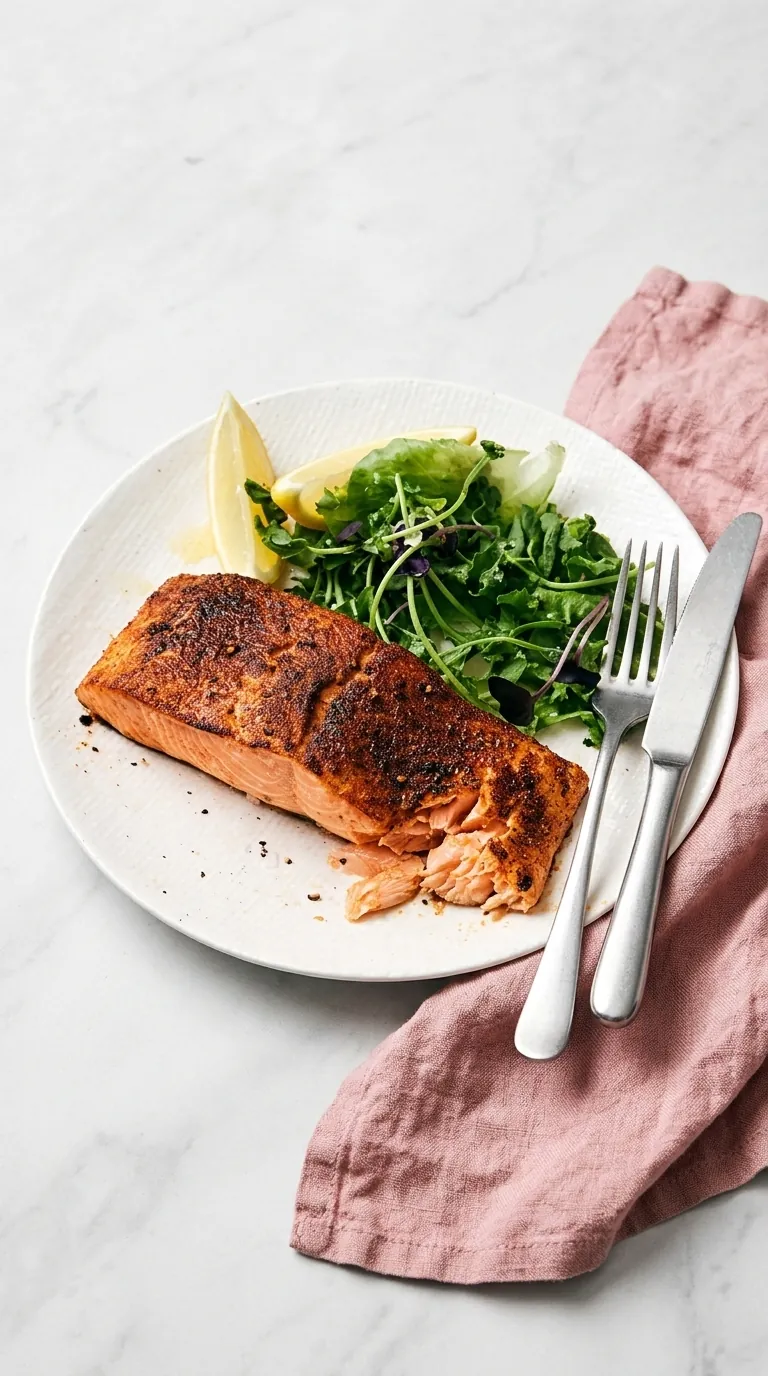
Ever open the fridge at lunchtime and wonder what you can make without spending an hour cooking? That’s when Air Fryer Salmon saves the day. With a tangy Dijon mustard coating, warm garlic, and smoky paprika, each fillet comes out tender, juicy, and full of flavor. Plus, you only need 20 minutes to get lunch on the table.
Make tender, flaky air fryer salmon with a flavorful Dijon mustard and spice coating in just 20 minutes. This easy recipe uses simple ingredients and makes a delicious, protein-rich lunch or quick weeknight dinner.
Table of Contents
Why You’ll Love This Air Fryer Salmon Recipe
This Air Fryer Salmon recipe makes a satisfying meal without complicated preparation. The Dijon mustard adds a gentle tang, while garlic and paprika create a savory, lightly crisp exterior.
Plus, you only need a few pantry ingredients. There’s no breading, messy coating station, or long marinating time.
Each serving also provides approximately 34 grams of protein. As a result, this recipe works beautifully for a filling lunch or quick family dinner.
Best of all, the air fryer cooks the salmon without requiring much attention. You can prepare your side dishes while the fish cooks.
Ingredients for Air Fryer Salmon
You only need seven simple ingredients to make this delicious seafood dish.
- 4 salmon fillets (6 ounces / 170 g each): Choose fillets with similar thickness for even cooking.
- 2 tablespoons Dijon mustard: Adds tangy flavor and helps the spices cling to the fish.
- 1 teaspoon paprika: Use sweet paprika for mild flavor or smoked paprika for a deeper taste.
- 1 teaspoon garlic powder: Adds a warm, savory flavor.
- ½ teaspoon kosher salt: Brings out the natural flavor of the salmon.
- ¼ teaspoon freshly ground black pepper: Adds gentle warmth.
- Olive oil cooking spray: Helps the surface develop a lightly crisp texture.
Choosing the Best Salmon Fillets
King, coho, and sockeye salmon all work well in this recipe. However, their thickness and fat content can affect the cooking time.
For the best results, choose fillets with similar thickness. That way, each piece cooks at approximately the same speed.
Fresh salmon works beautifully, but frozen salmon also makes a practical choice. Simply thaw frozen fillets overnight in the refrigerator before preparing them.
Seasonings and Easy Ingredient Substitutions
Dijon mustard gives this recipe its signature tangy flavor. However, stone-ground mustard also works if you enjoy a slightly coarser texture.
Meanwhile, sweet paprika creates a mild, savory coating. Smoked paprika adds a gentle smoky note without making the salmon spicy.
You can also replace salmon with steelhead trout. Just adjust the cooking time according to the thickness of your fillets.

How to Cook Salmon in the Air Fryer
Making Air Fryer Salmon couldn’t be much simpler. Follow these six steps for a tender center and flavorful coating.
Step 1: Prepare and Dry the Salmon Fillets
First, set your air fryer temperature to 400°F (200°C). You generally don’t need to preheat it for this recipe.
Next, use paper towels to pat the salmon fillets dry. Removing excess moisture helps the mustard and spices stick to the surface.
Step 2: Coat the Salmon with Dijon Mustard
Spread approximately ½ tablespoon of Dijon mustard over the top of each salmon fillet.
Then, use a spoon or pastry brush to distribute the mustard evenly. You only need to coat the upper surface, so leave the skin side alone.
Step 3: Add the Seasonings and Olive Oil Spray
Next, sprinkle the paprika, garlic powder, kosher salt, and black pepper evenly across the mustard coating.
For better coverage, sprinkle the seasonings directly from their containers while measuring the total amounts carefully.
Finally, lightly spray the tops with olive oil. This small step adds richness and helps the surface brown.
Step 4: Arrange the Salmon in the Air Fryer Basket
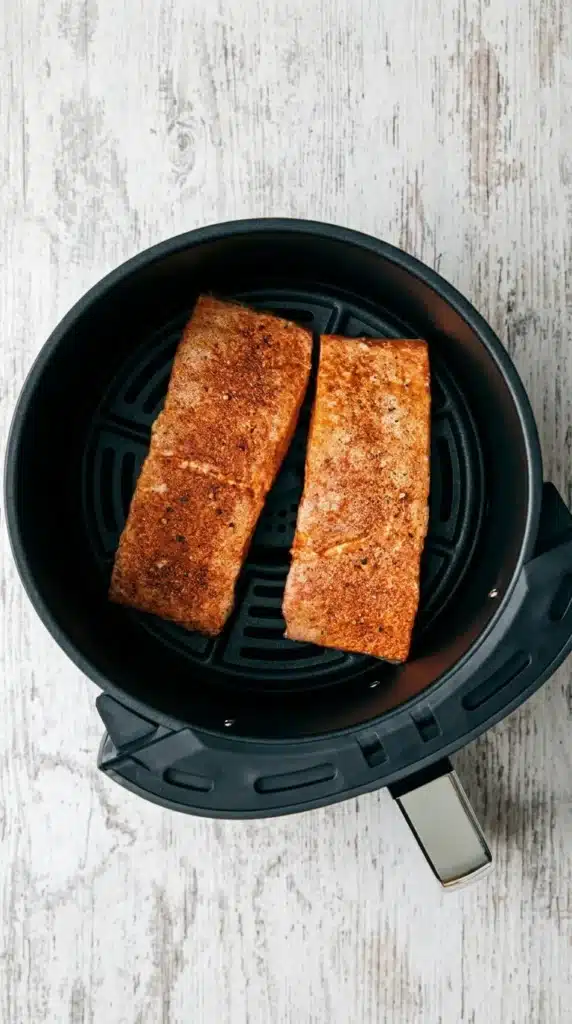
Place two salmon fillets in the air fryer basket with the skin facing down.
Also, leave enough space between the pieces for hot air to circulate. Avoid stacking the fillets because overcrowding can lead to uneven cooking.
If your air fryer has a large basket, you can cook all four fillets together in a single layer.
Step 5: Air Fry at 400°F for 8–10 Minutes
Cook the salmon at 400°F for approximately 8 to 10 minutes.
Then, check the fillets around the eight-minute mark. Thicker pieces may need a little more cooking time.
You don’t need to flip the salmon. Keeping the skin underneath helps the fillets hold together.
Step 6: Check for Doneness and Serve
Gently press a fork into the thickest part of the salmon. The flesh should separate into tender flakes.
For food safety, use a thermometer to check that the center reaches 145°F (63°C).
Finally, remove the cooked fillets and prepare the remaining portions. Serve immediately with your favorite sides.
How Long to Cook Salmon in the Air Fryer
Air Fryer Salmon generally takes 8 to 10 minutes per batch at 400°F. However, the exact cooking time depends on fillet thickness and your air fryer model.
Air Fryer Salmon Cooking Time by Thickness
Use this simple guide to estimate cooking times for thawed salmon.
| Salmon thickness | Approximate cooking time |
|---|---|
| ½ inch | 5 to 7 minutes |
| ¾ inch | 7 to 9 minutes |
| 1 inch | 8 to 10 minutes |
| 1½ inches | 10 to 12 minutes |
These times provide a starting point rather than a guarantee. Therefore, check the salmon early and extend cooking in short increments when necessary.
How to Tell When Salmon Is Perfectly Cooked
Properly cooked salmon develops a tender, flaky texture. The flesh also changes from translucent to opaque as it cooks.
However, appearance alone cannot confirm food safety. Always check the thickest section with a food thermometer.
The USDA recommends cooking fish to an internal temperature of 145°F (63°C).
Tips for Moist and Flaky Air Fryer Salmon
A few simple techniques can make a noticeable difference.
First, pat the salmon dry before adding mustard. Excess moisture can prevent the seasonings from sticking properly.
Next, avoid overcrowding the basket. Hot air needs enough room to circulate around each fillet.
Also, keep the skin attached during cooking. You can remove it afterward if you prefer.
Most importantly, avoid cooking the salmon longer than necessary. Check it early, then add a minute or two if needed.
What to Serve with Air Fryer Salmon
The savory mustard coating pairs well with vegetables, grains, and fresh salads. Plus, you can easily adjust the sides to match your appetite.
Easy Side Dishes for a Complete Lunch
For a comforting meal, serve your salmon with fluffy rice, roasted potatoes, or steamed green beans.
Meanwhile, roasted Brussels sprouts add a pleasant crunch that contrasts with the soft fish.
You can also serve the salmon with lemon wedges. A squeeze of fresh lemon adds brightness to the Dijon coating.
Healthy and Light Serving Ideas
For a lighter lunch, place the salmon over mixed greens with cucumber, tomatoes, and lemon dressing.
Alternatively, pair it with quinoa, steamed broccoli, or a Mediterranean bean salad.
As a result, you can build a satisfying meal with plenty of protein, vegetables, and fresh flavor.
How to Store and Reheat Air Fryer Salmon
Leftover Air Fryer Salmon makes a convenient lunch the following day. However, proper storage and gentle reheating help preserve its texture.
Storing Leftover Salmon in the Refrigerator
Allow the salmon to cool briefly before transferring it to an airtight container.
Then, refrigerate it within two hours of cooking. Enjoy the leftovers within three days for the best quality.
You can also serve leftover salmon cold over salad greens for an easy lunch.
Can You Freeze Cooked Air Fryer Salmon?
Yes, cooked salmon freezes well when you store it properly.
First, let the salmon cool completely without leaving it at room temperature for more than two hours.
Next, place the portions in a freezer-safe container with parchment paper between them to prevent sticking.
For the best texture, enjoy frozen cooked salmon within two to three months.
How to Reheat Salmon Without Drying It Out
For gentle reheating, set your air fryer or oven to approximately 275°F to 300°F.
Then, warm the salmon slowly and check it frequently. Heat refrigerated leftovers thoroughly to 165°F.
Alternatively, use a microwave at reduced power and cover the fish to help retain moisture.
Air Fryer Salmon FAQs
How long should you put salmon in the air fryer for?
Most salmon fillets need approximately 8 to 10 minutes at 400°F (200°C). However, thicker pieces may require additional cooking time. Check the center with a thermometer and aim for 145°F.
What are common mistakes when air frying salmon?
Common mistakes include overcrowding the basket, skipping the drying step, using too much oil, and overcooking the fish.
Also, avoid stacking salmon fillets. Instead, arrange them in a single layer to encourage even cooking.
Is 10 minutes enough to air fry salmon?
Yes, 10 minutes often works well for salmon fillets around one inch thick.
However, cooking time varies between air fryer models. Therefore, check the thickest section with a food thermometer before serving.
Can I wrap my salmon in foil and put it in an air fryer?
Yes, you can use foil if your air fryer manufacturer allows it.
However, foil can restrict airflow and reduce browning. Keep the foil secure beneath the salmon and away from the heating element.
For this recipe, I prefer cooking the fillets directly in the basket because circulating hot air creates a better exterior texture.
More Such Recipes
If you enjoyed this simple salmon lunch, you’ll find plenty of other easy meals and sides at Kai Recipes.
- Juicy air fryer salmon bites with lemon garlic butter make a delicious choice when you want smaller pieces of salmon with rich garlic flavor.
- Easy baked teriyaki salmon with a sweet and savory glaze brings a sweet, savory twist to your next seafood dinner.
- Fresh salmon salad with creamy lemon Dijon dressing offers a refreshing option for a light, satisfying lunch.
- One skillet salmon with creamy lemon orzo and spinach combines tender salmon with comforting pasta and fresh greens.
- Crispy air fryer Brussels sprouts with garlic seasoning make a flavorful vegetable side for your salmon.
- Mediterranean white bean salad with feta and lemon dressing adds freshness, fiber, and bright Mediterranean flavor to your plate.
Final Thoughts
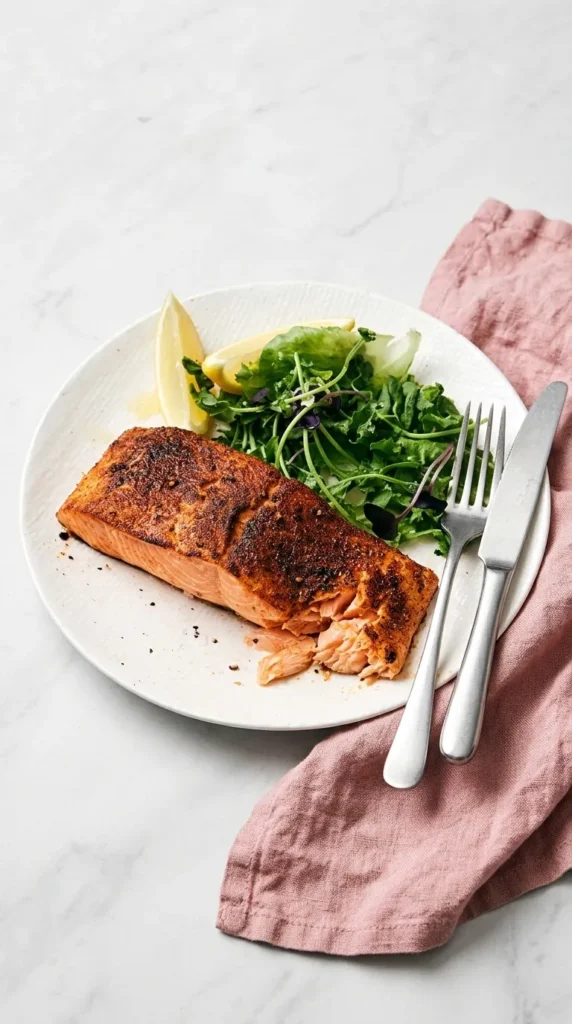
Air Fryer Salmon proves that a delicious homemade lunch doesn’t need complicated ingredients or hours in the kitchen.
With Dijon mustard, garlic, paprika, and a few minutes of cooking, you can enjoy tender salmon with a savory, lightly crisp coating.
Plus, this recipe pairs beautifully with rice, roasted vegetables, or fresh salads. Once you learn the cooking time that works for your air fryer, preparing salmon becomes even easier.
For more simple recipes and everyday meal inspiration, follow Kai Recipes on Pinterest and Facebook.
Air Fryer Salmon Nutrition Facts
The following values provide approximate nutrition information for one salmon fillet.
| Nutrient | Amount per serving |
|---|---|
| Calories | 250 kcal |
| Carbohydrates | 1 g |
| Protein | 34 g |
| Total fat | 11 g |
| Saturated fat | 2 g |
| Polyunsaturated fat | 4 g |
| Monounsaturated fat | 4 g |
| Cholesterol | 94 mg |
| Sodium | 449 mg |
| Potassium | 866 mg |
| Fiber | 1 g |
| Sugar | 1 g |
| Vitamin A | 320 IU |
| Vitamin C | 1 mg |
| Calcium | 28 mg |
| Iron | 2 mg |
Air Fryer Salmon : Amazing, Easy and Delicious in 20 Min
Description
Make tender, flaky Air Fryer Salmon with a savory Dijon mustard, paprika, and garlic coating. This easy recipe uses simple pantry ingredients and makes a delicious, protein-rich lunch or quick weeknight dinner.
Ingredients
- 4 salmon fillets (6 ounces / 170 g each)
- 2 tablespoons Dijon mustard
- 1 teaspoon paprika (sweet or smoked)
- 1 teaspoon garlic powder
- ½ teaspoon kosher salt
- ¼ teaspoon freshly ground black pepper
- Olive oil cooking spray, as needed
Instructions
- Set the air fryer temperature to 400°F (200°C). Pat the salmon fillets dry with paper towels to remove excess moisture.
- Spread the Dijon mustard evenly over the top of each fillet, using approximately ½ tablespoon per portion.
- Sprinkle the salt, black pepper, garlic powder, and paprika evenly over the mustard-coated salmon.
- Lightly spray the seasoned tops with olive oil cooking spray.
- Arrange two salmon fillets in the air fryer basket, skin-side down. Leave enough space between the fillets for hot air circulation.
- Air fry at 400°F (200°C) for 8 to 10 minutes. Check the salmon around the 8-minute mark and extend cooking in short increments when necessary.
- Check the thickest part with a food thermometer. Cook until the salmon reaches an internal temperature of 145°F (63°C). The flesh should also separate easily into flakes when tested with a fork.
- Remove the cooked fillets and repeat the process with the remaining two portions. Serve immediately with your favorite side dishes.
Notes
Drying the salmon before seasoning helps the mustard and spices adhere to the surface.
Only the upper side of each salmon fillet needs seasoning.
Sprinkling spices directly from their containers can create a more uniform coating than applying them with measuring spoons.
Keep the skin attached during cooking. Place fillets skin-side down and remove the skin afterward if preferred.
Preheating the air fryer is generally unnecessary for this recipe.
Cooking times depend on the thickness of the salmon and the air fryer model. Check the fish after approximately 8 minutes.
Avoid cooking salmon longer than necessary because excessive heat can dry out the flesh.
A large air fryer basket may accommodate all four fillets at once if you arrange them in a single layer with enough space.
King, coho, and sockeye salmon are suitable choices.
Steelhead trout can replace salmon in this recipe.
Stone-ground mustard can replace Dijon mustard for a slightly coarser texture.
Sweet paprika creates a mild flavor, while smoked paprika adds a smoky note.
Fresh or frozen salmon works well. Thaw frozen salmon completely in the refrigerator before cooking.
Store leftover cooked salmon in an airtight container in the refrigerator for up to 3 days.
To freeze, allow cooked salmon to cool completely, then transfer it to a freezer-safe container with parchment paper between portions. Refrigerate or freeze within 2 hours of cooking.
For best quality, enjoy frozen cooked salmon within 2 to 3 months.
Reheat salmon gently at a low temperature in the air fryer, oven, or microwave. Heat leftovers thoroughly to 165°F (74°C).
Serve with rice, quinoa, roasted vegetables, fresh salad greens, or lemon wedges.
The listed recipe time is 20 minutes. Cooking two separate batches for 8 to 10 minutes each may require 21 to 25 minutes total, including preparation.
Nutrition values are approximate and may vary depending on salmon variety and ingredient brands.