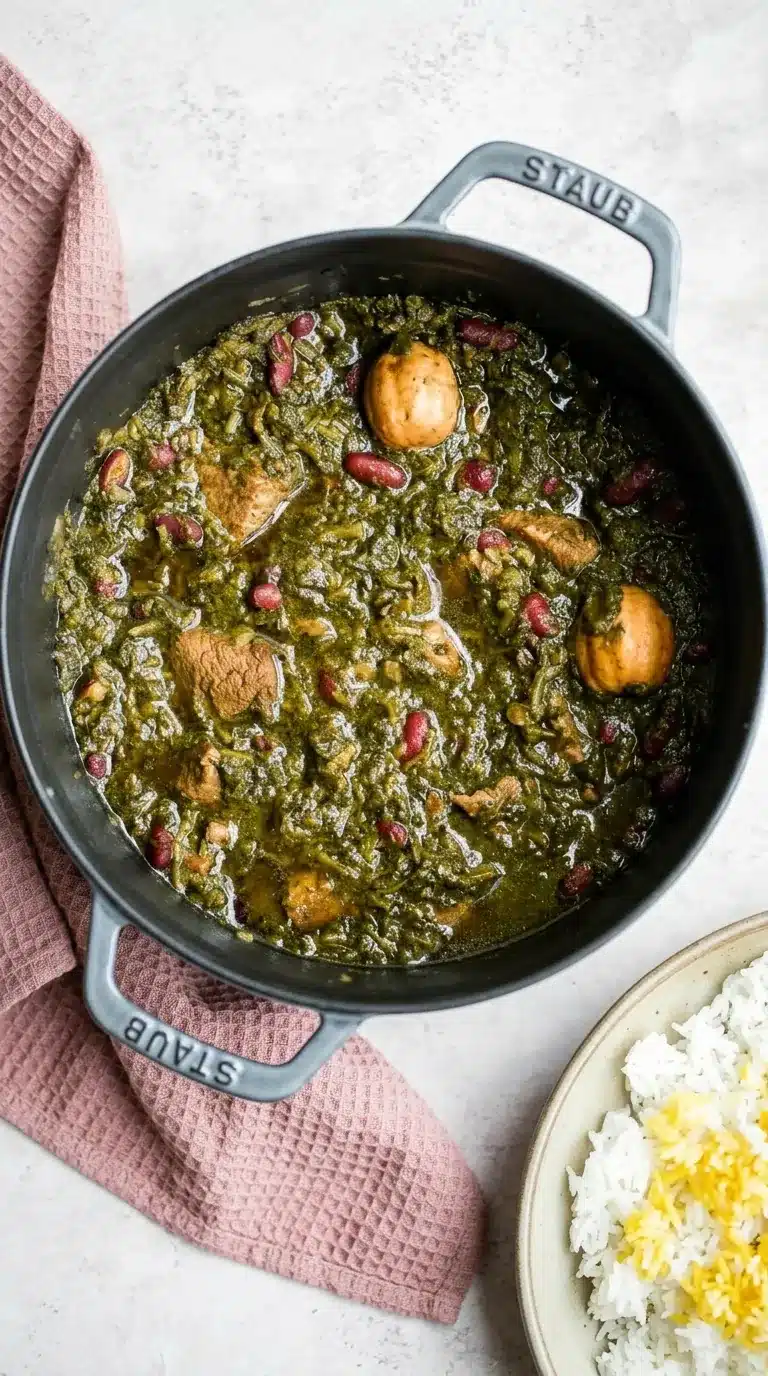
The smell of fresh herbs slowly cooking on the stove always makes the kitchen feel warm and welcoming. Ghormeh Sabzi brings that feeling to every meal with its deep herb flavor, tender beef, and tangy dried limes. This classic Persian herb stew may take a little time, but every spoonful is worth it. In this guide, you’ll learn exactly how to make Ghormeh Sabzi, along with helpful tips, simple substitutions, storage advice, serving ideas, FAQs, and the complete recipe.
Table of Contents
Why You’ll Love This Ghormeh Sabzi Recipe
There are many reasons to fall in love with Ghormeh Sabzi. First, it fills your home with the rich aroma of fresh herbs as it simmers. Then, every bite delivers tender beef, creamy kidney beans, and bright citrus notes from dried limes.
Here are a few more reasons to make this recipe:
- Rich and authentic Persian flavor
- Simple ingredients that come together beautifully
- Naturally gluten free
- Great for family dinners or meal prep
- Even better the next day as the flavors continue to develop
- Easy to customize with simple ingredient swaps
- Perfect with fluffy basmati rice and fresh salad
Although the cooking time is longer than many weeknight meals, most of that time is hands off. As a result, you can prepare side dishes or simply relax while the stew gently simmers.
What Is Ghormeh Sabzi?
Ghormeh Sabzi is one of the most loved dishes in Persian cooking. The name combines two Persian words. “Ghormeh” refers to cooked meat, while “Sabzi” means herbs. Together, they create a hearty stew filled with fresh herbs, beef, kidney beans, and dried limes.
Unlike many beef stews, Ghormeh Sabzi gets most of its flavor from herbs instead of tomatoes or cream. Parsley, cilantro, spinach, and fenugreek cook slowly until they develop a rich, earthy taste. Meanwhile, dried limes add a gentle tang that balances the savory broth.
Families across Iran often prepare Ghormeh Sabzi for gatherings, holidays, and weekend meals. In fact, many cooks believe the stew tastes even better after resting overnight because the flavors continue to blend.
Ingredients You’ll Need
The beauty of Ghormeh Sabzi comes from fresh herbs, tender beef, and a few simple pantry staples. Although the ingredient list looks long, each item adds something special to the finished stew. Together, they create the rich, savory, and slightly tangy flavor that makes this dish unforgettable.
Ingredients for the Beef
Start with these ingredients for the beef base:
- 1 tablespoon vegetable oil
- 1 pound stewing beef, cut into 1.5 inch cubes
- 1 small onion, diced
- 1/2 teaspoon salt
- 1/2 teaspoon ground turmeric
The beef becomes tender as it slowly simmers. Meanwhile, the onion and turmeric build a flavorful base for the stew.
Ingredients for the Herb Stew
Next, gather everything you need for the herb mixture.
- 2 tablespoons vegetable oil
- 2 bunches parsley, finely chopped
- 1 bunch spinach, finely chopped
- 1 bunch cilantro, finely chopped
- 1/2 teaspoon ground turmeric
- 1/2 tablespoon dried fenugreek
- 1/2 cup red kidney beans, soaked overnight, rinsed, and drained
- 2 cups water
- 2 dried limes
- Salt and black pepper, to taste
Fresh herbs are the heart of Ghormeh Sabzi. As they cook, they become darker, richer, and wonderfully fragrant. Then the dried limes add their signature bright and tangy flavor.
Ingredient Substitutions and Helpful Notes
If you cannot find every traditional ingredient, don’t worry. A few simple swaps still create a delicious bowl of Ghormeh Sabzi.
- Use canned kidney beans instead of dried beans. Simply rinse and drain them, then stir them into the stew during the last 15 minutes of cooking.
- Fresh fenugreek works well in place of dried fenugreek. Use about 1½ tablespoons.
- If dried limes are unavailable, add 2 tablespoons of fresh lime juice or lemon juice near the end of cooking.
- Soak dried kidney beans overnight for even cooking and a better texture.
- Choose fresh herbs with bright green leaves for the best flavor.
Although substitutions work well, fresh herbs remain the key to an authentic tasting Ghormeh Sabzi.
How to Make Ghormeh Sabzi
Making Ghormeh Sabzi is simple when you follow each step. Most of the cooking time comes from gentle simmering, so the stew develops deep flavor without much effort.
Step 1: Brown the Beef
Heat 1 tablespoon of vegetable oil in a large pot over medium high heat.
Add the beef cubes and cook for 6 to 8 minutes until browned on all sides. Then stir in the diced onion and cook until it softens.
Next, season with the salt and ground turmeric. Stir everything together, then transfer the beef mixture to a plate and set it aside.
The browned beef adds rich flavor that carries through the entire stew.
Step 2: Cook the Fresh Herbs
Heat the remaining 2 tablespoons of vegetable oil in a large pot over medium heat.
Add the chopped parsley, spinach, and cilantro. Stir often and cook for about 10 minutes until the herbs wilt and become darker in color.
Next, stir in the ground turmeric and dried fenugreek. Cook for another minute so the spices become fragrant.
This step gives Ghormeh Sabzi its rich color and deep herbal flavor, so take your time and let the herbs cook gently.
Step 3: Build the Stew
Return the browned beef and onion mixture to the pot.
Then add the soaked kidney beans, water, and dried limes.
Bring everything to a gentle boil while stirring well. Once the stew starts bubbling, reduce the heat to low.
If you prefer the dried limes to stay whole, add them during the final 30 minutes of cooking instead.
Step 4: Simmer Until Tender
Cover the pot with a lid and let the Ghormeh Sabzi simmer for 1 to 1½ hours.
Meanwhile, stir the stew every now and then to keep the beans from sticking to the bottom.
As the stew cooks, the beef becomes fork tender and the herbs blend into a rich, flavorful broth. The kidney beans also soften and add a creamy texture.
If the stew becomes too thick, stir in a small splash of water. However, avoid adding too much because Ghormeh Sabzi should stay thick and hearty.
Step 5: Finish, Season, and Serve
Once the beef is tender, taste the stew.
Then season with salt and black pepper until the flavors are balanced.
Remove the dried limes if desired before serving.
Serve the Ghormeh Sabzi hot over fluffy basmati rice. Every spoonful brings together savory beef, creamy beans, fragrant herbs, and the bright tang of dried limes.

Tips for the Best Ghormeh Sabzi
A few simple tips can make a big difference. Although this recipe is straightforward, paying attention to the small details creates the best flavor and texture.
- Brown the beef well before building the stew.
- Cook the herbs until they are fully wilted and fragrant.
- Soak dried kidney beans overnight for even cooking.
- Stir the stew occasionally while it simmers.
- Add the dried limes during the last 30 minutes if you want them to stay intact.
- Let the stew rest for 10 to 15 minutes before serving. The flavors become even richer.
- If you have leftovers, enjoy them the next day because Ghormeh Sabzi often tastes even better after resting overnight.
Common Mistakes to Avoid
Avoid rushing the simmering time. Tender beef needs time to cook slowly.
Do not skip the herb cooking step. The herbs develop their signature flavor only after they soften and darken.
Also, avoid adding too much water. A thick stew has the best texture.
Finally, taste before serving. A little extra salt or pepper can bring all the flavors together.
Make Ahead Tips
Ghormeh Sabzi is an excellent make ahead meal.
Prepare it a day in advance, then refrigerate it overnight. The herbs, beef, beans, and dried limes blend together even more, creating an even richer stew.
You can also chop all the herbs the day before cooking. Store them in an airtight container in the refrigerator until you’re ready to begin.
Serving Suggestions
Ghormeh Sabzi becomes a complete and satisfying meal with a few simple sides. While basmati rice is the traditional choice, several fresh and flavorful dishes pair beautifully with this hearty Persian stew.
What to Serve with Ghormeh Sabzi
Start with a generous serving of fluffy basmati rice. The rice soaks up the rich broth and balances the bold herb flavor.
For a fresh contrast, serve Ghormeh Sabzi with Persian Shirazi salad. The crisp cucumber, tomato, and onion add brightness to every bite.
You can also enjoy the stew with warm Barbari bread or soft pita bread. Both are perfect for dipping into the flavorful broth.
If you’re preparing a larger dinner, add a few fresh salads or Mediterranean inspired dishes to the table.
Flavor, Texture, Yield, Timing, and Dietary Information
Ghormeh Sabzi has a rich, savory, slightly sweet, and gently tangy flavor. The fresh herbs create deep earthiness, while the dried limes add a bright citrus finish. Meanwhile, the beef becomes incredibly tender, and the kidney beans provide a creamy texture.
Recipe Details
- Yield: 4 servings
- Prep Time: 15 minutes, plus overnight soaking for the beans
- Cook Time: 1 hour 5 minutes
- Total Time: 1 hour 45 minutes
- Cooking Method: Stovetop
- Diet: Gluten free
Nutrition Per Serving
- Calories: 312.1 kcal
- Fat: 16.5 g
- Carbohydrates: 13.4 g
- Fiber: 4.9 g
- Sugars: 2.1 g
- Protein: 30.3 g
- Sodium: 711.6 mg
One of the best things about Ghormeh Sabzi is that the flavor becomes even richer after resting for several hours or overnight.
Storage and Reheating
This stew stores very well, which makes it perfect for meal prep.
How to Store Leftovers
Allow the Ghormeh Sabzi to cool completely.
Then transfer it to an airtight container and refrigerate it for up to 4 days.
As the stew rests, the herbs and spices continue to blend. As a result, many people enjoy it even more the next day.
How to Freeze and Reheat
For longer storage, place cooled portions into freezer safe containers.
Freeze for up to 3 months.
When you’re ready to enjoy it again, thaw the stew overnight in the refrigerator.
Next, reheat it gently on the stovetop for 5 to 10 minutes over low heat. Stir occasionally until it is heated through.
Before serving, taste the stew and adjust the seasoning if needed.
Follow Kai Recipes on Pinterest for more recipe inspiration. You can also join the community on Facebook to discover new family favorites and cooking ideas.
Frequently Asked Questions
What does Ghormeh Sabzi have?
Ghormeh Sabzi includes stewing beef, parsley, spinach, cilantro, fenugreek, kidney beans, dried limes, onion, turmeric, vegetable oil, salt, pepper, and water. These simple ingredients cook together to create its signature rich and tangy flavor.
Is Ghormeh Sabzi Kurdish?
Ghormeh Sabzi is a classic Persian stew and one of Iran’s national dishes. It is also enjoyed in Kurdish communities and nearby regions, although recipes may vary from family to family.
What is Ghormeh Sabzi supposed to taste like?
Ghormeh Sabzi has a rich savory taste with earthy herbs, tender beef, creamy beans, and a bright tang from dried limes. The combination creates a deep, comforting flavor that becomes even better after resting.
Why is Ghormeh Sabzi so good?
Ghormeh Sabzi tastes so satisfying because the herbs slowly develop a deep flavor while the beef becomes tender during the long simmer. The dried limes add a fresh tang that balances the richness of the stew.
More Such Recipes
- Chicken Shawarma Bowls with Middle Eastern Flavors
- Mediterranean Ground Beef Stir Fry
- Indian Pumpkin Curry
- Easy White Bean Soup
- Mediterranean Quinoa Salad
- Greek Salad Recipe

Final Thoughts
Ghormeh Sabzi is much more than a simple beef stew. It celebrates fresh herbs, slow cooking, and comforting homemade meals that bring people together. Although it takes a little patience, every step builds layers of flavor that make this Persian classic unforgettable. Whether you serve it for a cozy family dinner or prepare it ahead for the week, this recipe rewards you with tender beef, fragrant herbs, and a rich broth that tastes even better the next day.
Print
Ghormeh Sabzi Recipe | Amazing Authentic Persian Stew
- Total Time: 1 hour 45 minutes
- Yield: 4 servings 1x
- Diet: Gluten Free
Description
Ghormeh Sabzi is a classic Persian herb stew made with tender beef, kidney beans, fresh herbs, fenugreek, and tangy dried limes. Serve it over fluffy basmati rice for a rich and comforting dinner.
Ingredients
For the beef:
1 tablespoon vegetable oil
1 pound stewing beef, cut into 1.5 inch cubes
1 small onion, diced
1/2 teaspoon salt
1/2 teaspoon ground turmeric
For the herb stew:
2 tablespoons vegetable oil
2 bunches parsley, finely chopped
1 bunch spinach, finely chopped
1 bunch cilantro, finely chopped
1/2 teaspoon ground turmeric
1/2 tablespoon dried fenugreek
1/2 cup red kidney beans, soaked overnight, rinsed, and drained
2 cups water
2 dried limes
Salt and black pepper, to taste
For serving:
Cooked basmati rice
Instructions
1. Heat 1 tablespoon vegetable oil in a large pot over medium high heat.
2. Add the beef and brown it for 6 to 8 minutes, stirring as needed.
3. Stir in the diced onion and cook until softened.
4. Season the beef with salt and turmeric, then transfer the mixture to a plate and set it aside.
5. Heat the remaining 2 tablespoons vegetable oil in the same large pot over medium heat.
6. Add the parsley, spinach, and cilantro.
7. Cook the herbs for about 10 minutes, stirring often, until wilted and darker in color.
8. Stir in the remaining turmeric and dried fenugreek.
9. Return the beef and onion mixture to the pot.
10. Add the soaked kidney beans, water, and dried limes.
11. Bring the stew to a boil.
12. Reduce the heat to low, cover the pot, and simmer for 1 to 1 1/2 hours.
13. Stir occasionally until the beans cook through and the beef becomes tender.
14. For dried limes that stay more intact, add them during the final 30 minutes instead.
15. Taste the stew, then season with more salt and black pepper as needed.
16. Serve the Ghormeh Sabzi hot over basmati rice.
Notes
Soak dried kidney beans overnight so they cook evenly.
You may use canned kidney beans instead. Rinse and drain them, then add them during the final 15 minutes.
You may replace dried fenugreek with about 1 1/2 tablespoons fresh fenugreek.
If dried limes are unavailable, add 2 tablespoons lime juice or lemon juice.
The stew tastes even richer after it rests or sits overnight.
Serve with basmati rice, Persian Shirazi salad, Barbari bread, or pita bread.
Store leftovers in an airtight container in the refrigerator for 3 to 4 days.
Freeze cooled portions for up to 3 months.
Thaw frozen stew overnight in the refrigerator.
Reheat gently on the stovetop for 5 to 10 minutes, stirring occasionally.
- Prep Time: 15 minutes, plus overnight bean soaking
- Cook Time: 1 hour 5 minutes
- Category: Dinner
- Method: Stovetop
- Cuisine: Persian
Nutrition
- Serving Size: 1 serving
- Calories: 312.1
- Sugar: 2.1 g
- Sodium: 711.6 mg
- Fat: 16.5 g
- Carbohydrates: 13.4 g
- Fiber: 4.9 g
- Protein: 30.3 g