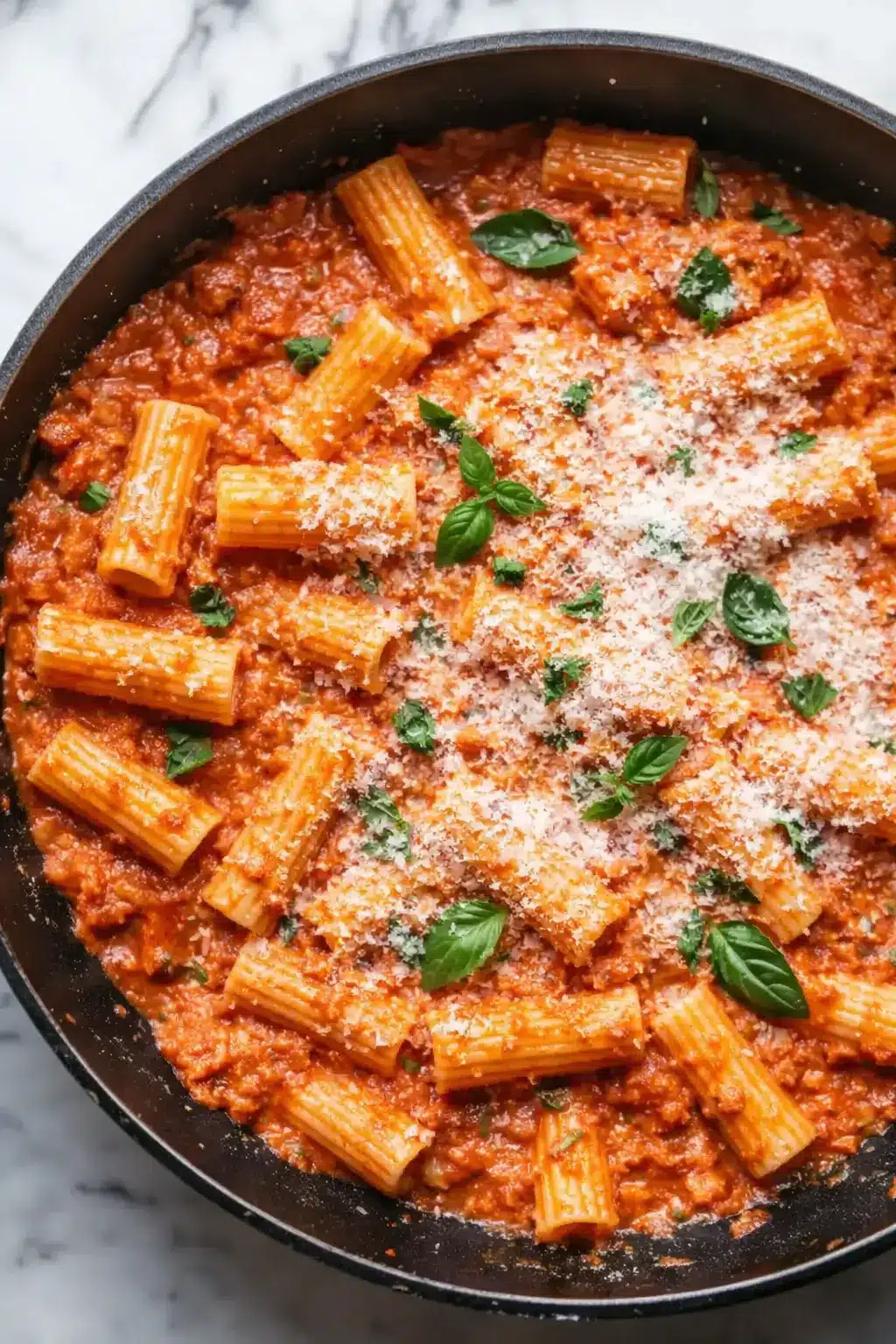
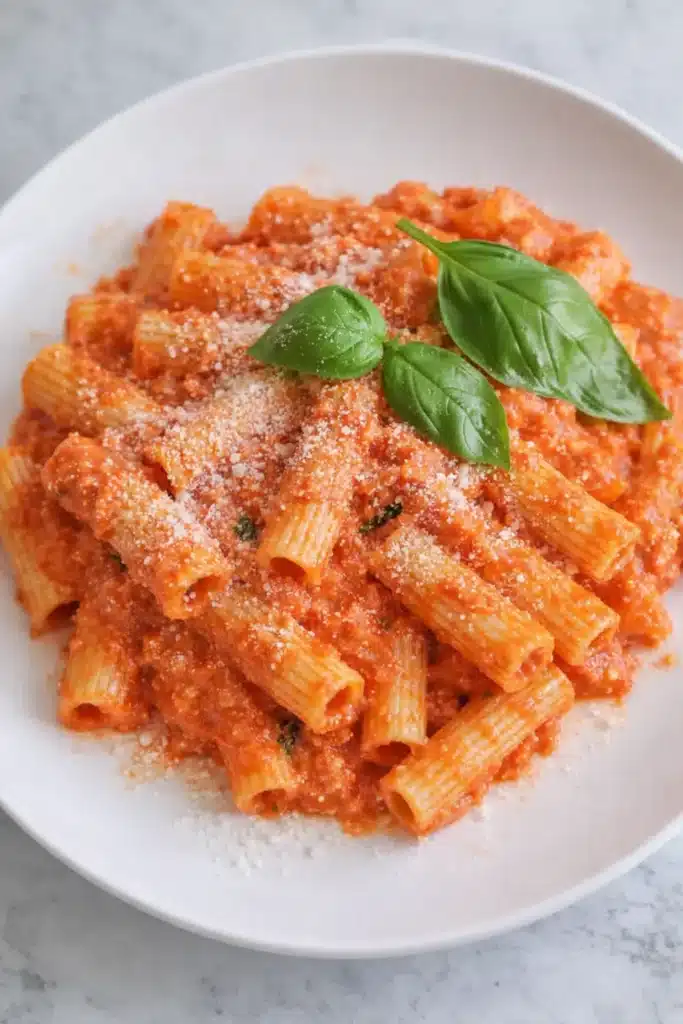
Some evenings call for something warm and comforting, yet still light enough to keep you moving. This creamy tomato ricotta pasta hits that balance beautifully. It’s smooth, rich, and full of cozy Italian flavor. Plus, it comes together easily with pantry ingredients and a handful of fresh basil.
Table of Contents
Why This Creamy Tomato Ricotta Pasta Works
A Cozy, Affordable, Vegetarian Dinner Option
This dish fits perfectly into a weeknight rotation. It’s hearty enough to satisfy, yet doesn’t rely on meat. Using simple, affordable ingredients like passata, pasta, and ricotta makes it budget-friendly. And because it’s vegetarian, it’s ideal for meat-free Mondays or any comforting night in.
The Perfect Balance of Creamy and Bright Flavors
Ricotta brings a natural creaminess without being heavy, while the tomato base adds brightness and depth. The basil ties it all together with that unmistakable fresh aroma. Each forkful tastes light yet indulgent a little creamy, a little tangy, and completely satisfying.
Ingredients You’ll Need
Pantry Staples and Fresh Add-Ins
You’ll need:
- 250 ml passata or finely chopped tomatoes
- 3 tablespoons extra virgin olive oil
- 1/2 onion, finely chopped
- Salt and pepper
- 300 g pasta (penne or fusilli work well)
- 1 tablespoon rock salt for boiling water
- Fresh basil leaves, torn or roughly chopped
Choosing the Best Ricotta and Cheese
Use 250 g fresh ricotta, drained of excess liquid. Whole-milk ricotta makes the sauce beautifully smooth. Combine it with finely grated Parmigiano-Reggiano for nutty flavor. You can also substitute Grana Padano or Pecorino Romano for a slightly saltier edge.
How to Make Creamy Tomato Ricotta Pasta (Step-by-Step)
Build the Tomato Basil Sauce
Start by heating olive oil in a large pan over medium-low heat. Add chopped onion and cook for about 10 minutes until soft and golden. Then add passata, a pinch of salt, and freshly ground pepper. Let it simmer gently for 15–20 minutes, stirring occasionally. Add torn basil and cook briefly to release its fragrance.
Cook the Pasta and Reserve the Water
Meanwhile, bring a large pot of water to a boil and add rock salt. Cook the pasta until just al dente, about 12 minutes. Reserve at least one cup of pasta water before draining. This step is key to adjusting the sauce later.
Make the Ricotta Mixture
In a bowl, whisk together half the ricotta, a splash of pasta water, and some grated cheese until smooth. This creates a creamy base that blends easily with the sauce.
Combine Everything Into a Silky Sauce
Pour the ricotta mixture into the tomato sauce over low heat. Stir until it becomes creamy and unified. Add the cooked pasta, tossing gently until coated. Adjust the consistency with more pasta water if needed. Serve with more grated cheese and basil on top.

Tips for the Creamiest, Most Flavorful Result
Ricotta Texture and Temperature Matters
Use room-temperature ricotta so it melts smoothly into the sauce. If it’s cold, it may curdle or stay grainy.
Pasta Water Tricks for Perfect Consistency
The starch in pasta water helps the sauce cling beautifully. Add small amounts until the sauce reaches your ideal texture thick enough to coat the pasta, but not heavy.
Basil Timing for Maximum Aroma
Always add basil near the end of cooking. Early addition can dull its fresh aroma. For dried basil, add it earlier to deepen the flavor.
Ingredient Swaps and Variations
Pasta Shape Alternatives
Try rigatoni, shells, or spaghetti for a different feel. Short pasta holds the creamy sauce best, but long strands work too if you prefer.
Tomato Options
Crushed tomatoes give a chunkier sauce, while passata creates a smoother one. You can even mix both for texture and balance.
Cheese and Herb Substitutions
If you don’t have Parmigiano-Reggiano, use Grana Padano or Pecorino Romano. Add oregano or thyme for a different herbal note.
What to Serve with Creamy Tomato Ricotta Pasta
Light Sides to Balance the Richness
Pair your pasta with a crisp green salad or steamed vegetables. A simple side of arugula with lemon vinaigrette keeps the meal fresh and balanced.
Simple Add-Ons to Turn It into a Full Meal
Crusty bread or garlic toast complements the creamy sauce perfectly. You could also add roasted veggies or a few olives for a Mediterranean twist.
Storage and Reheating Guide
How to Store Leftovers Safely
Store leftover pasta in an airtight container in the fridge for up to three days. The sauce may thicken slightly, which is normal.
Reheating Without Losing Creaminess
Warm gently on the stovetop with a splash of water or milk to loosen the sauce. If microwaving, do it in short intervals and stir in between for even heat.
Frequently Asked Questions
Can you use ricotta to make a creamy pasta sauce?
Yes, ricotta makes a deliciously creamy sauce when mixed with a little pasta water and cheese.
Does ricotta go with tomato sauce?
Absolutely! The mild, milky flavor of ricotta softens the acidity of tomatoes beautifully.
Is ricotta cheese good in pasta?
It’s wonderful in pasta. Ricotta adds creaminess without making the dish heavy.
Can I use ricotta instead of cream in a sauce?
Yes, you can. It’s a lighter option that still provides richness and smoothness.
More Such Recipes
- Creamy, light smoked salmon linguine dinner
- Juicy mushroom stuffed chicken breast easy dinner recipe
- Tasty baked gnocchi mac and cheese comfort dinner
- Best beef stew in red wine sauce hearty dinner
- Beef stew and dumplings amazing comfort dinner
- Cheesy tomato tortellini soup creamy comfort dinner
- Quick ground turkey orzo one-pan dinner recipe
Conclusion
This creamy tomato ricotta pasta proves that comfort food doesn’t have to be complicated. It’s fresh, flavorful, and satisfying all in under an hour. Pair it with a salad or warm bread, and you’ve got a complete, cozy dinner. Follow along on Pinterest or Facebook for more quick, delicious pasta ideas.
Print
Creamy Tomato Ricotta Pasta | Simple & Amazing Dinner
- Total Time: 60 minutes
- Yield: 4 servings 1x
- Diet: Vegetarian
Description
A cozy, creamy tomato ricotta pasta that combines simple ingredients into a warm, comforting vegetarian dinner. Balanced with basil and Parmigiano-Reggiano, this easy weeknight meal is light yet rich in flavor.
Ingredients
250 ml passata or finely chopped tomatoes
3 tablespoons extra virgin olive oil
1/2 onion finely chopped
Salt and pepper
300 grams pasta such as penne or fusilli
1 tablespoon rock salt for boiling water
Fresh basil leaves torn or roughly chopped
250 grams fresh ricotta drained of excess liquid
Parmigiano-Reggiano finely grated (can substitute Grana Padano or Pecorino Romano)
Instructions
1. Heat olive oil in a pan over medium-low heat and sauté the chopped onion until soft and golden, about 10 minutes.
2. Add passata, season with salt and pepper, and simmer on low for 15–20 minutes until thickened.
3. Add torn basil to the sauce and cook briefly to enhance the flavor.
4. Boil a large pot of water with rock salt and cook pasta until al dente, about 12 minutes, reserving some pasta water before draining.
5. In a bowl, combine half the ricotta with a splash of reserved pasta water and grated cheese until smooth.
6. Stir the ricotta mixture into the tomato sauce over low heat until fully blended.
7. Add cooked pasta to the sauce and mix gently, adjusting the texture with more pasta water if needed.
8. Serve immediately with additional grated cheese and fresh basil if desired.
Notes
Use whole-milk ricotta for the best creamy texture; blended cottage cheese is an alternative but will affect consistency.
Cook pasta slightly under package instructions to avoid overcooking when added to the sauce.
Reserve at least 1 cup of pasta water for adjusting sauce consistency.
Fresh basil provides better flavor; use 1 tsp dried basil if fresh is unavailable and add earlier in the cooking process.
Substitute Parmigiano-Reggiano with Grana Padano or Pecorino Romano for varied flavor.
- Prep Time: 15 minutes
- Cook Time: 45 minutes
- Category: Dinner
- Method: Stovetop
- Cuisine: Italian
Nutrition
- Serving Size: 1 plate
- Calories: 1300–1500
- Sugar: 12 g
- Sodium: 800 mg
- Fat: 70–85 g
- Saturated Fat: 35 g
- Unsaturated Fat: 40 g
- Trans Fat: 0 g
- Carbohydrates: 150–170 g
- Fiber: 6 g
- Protein: 45–60 g
- Cholesterol: 160 mg