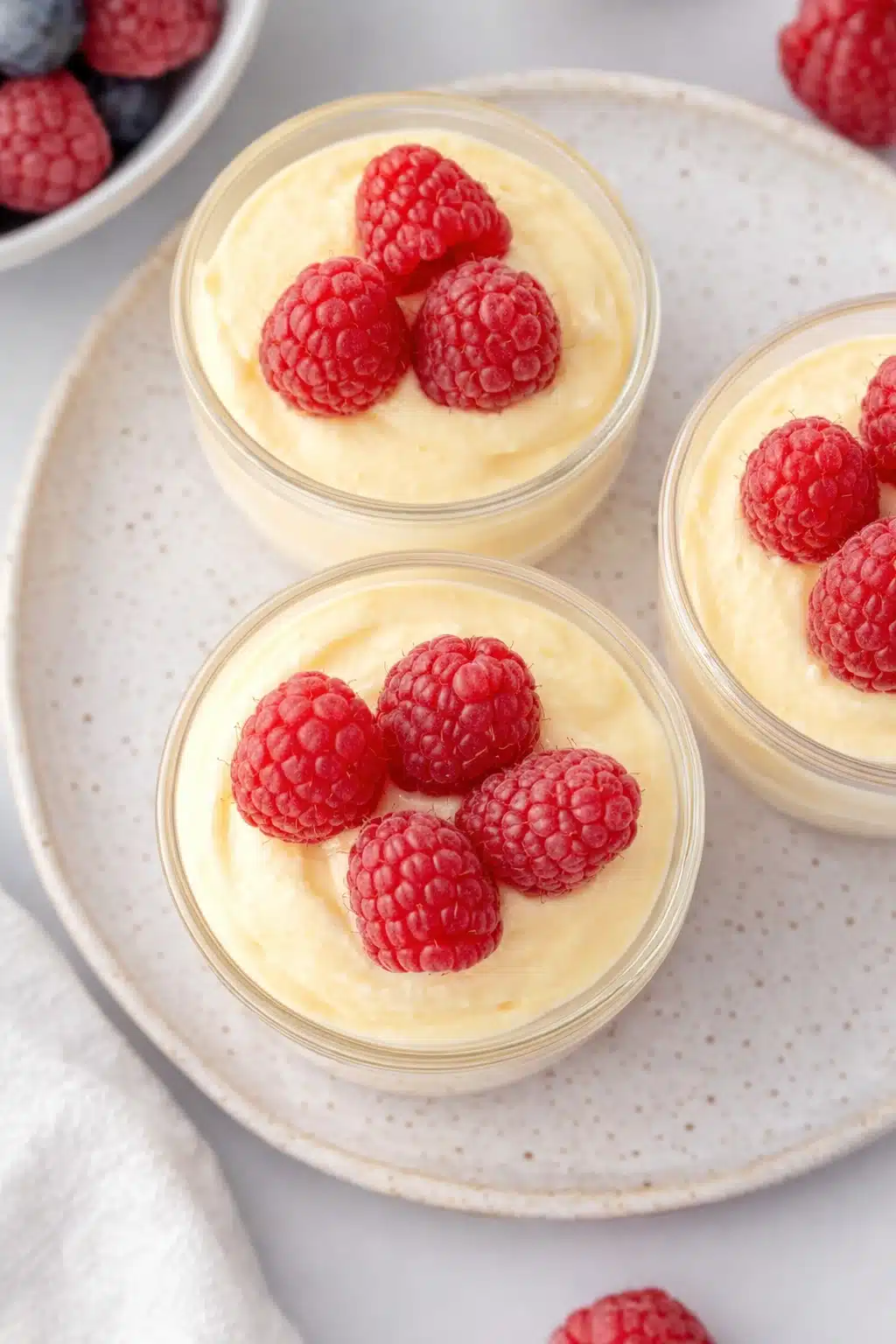
There’s something quietly satisfying about a dessert that feels indulgent but takes just minutes to make. This Greek yogurt dessert fits right into that sweet spot cool, creamy, and slightly tangy with a cheesecake-like finish. Perfect for lazy evenings or quick weekend treats, it’s a no-bake recipe that still tastes like you spent hours in the kitchen.
Table of Contents
Why You’ll Love This Greek Yogurt Dessert
Quick Prep and No Baking Required
You can whip this dessert together in just 10 minutes. No oven, no heat, no fuss. Just mix, chill, and spoon into a bowl. It’s a lifesaver when you crave something sweet but don’t want to deal with baking pans or preheating.
Light, Tangy, Cheesecake-Inspired Flavor
Each spoonful brings that perfect blend of tangy and sweet. The Greek yogurt gives a gentle tartness that balances beautifully with the cheesecake pudding mix. It’s creamy without being heavy, and it hits that cheesecake craving fast.
High-Protein, Lower-Calorie Treat Option
Because this recipe uses Greek yogurt, it packs more protein and fewer calories than most desserts. It’s a light, feel-good indulgence that satisfies without the guilt.
Ingredients You’ll Need
Greek Yogurt Choice and Why Thickness Matters
Use full-fat vanilla Greek yogurt for the richest texture and best flavor. The thicker the yogurt, the creamier your dessert will turn out. Greek-style yogurt holds up beautifully against the pudding mix, creating a mousse-like consistency.
Pudding Mix for Creaminess and Structure
Instant cheesecake pudding mix adds structure and smoothness. It thickens the yogurt, turning it from simple snack to dessert-worthy cream.
Milk Options to Adjust Texture
Almond milk keeps it light, but any milk works fine. Add it slowly as you whisk until you reach your desired texture—just creamy enough to hold its shape on a spoon.
How to Make This Easy Greek Yogurt Dessert
Step 1: Whisk the Yogurt and Pudding Mix Until Smooth
In a mixing bowl, whisk together 1 cup of Greek yogurt and 1 tablespoon of pudding mix. Keep whisking until the mix dissolves completely and you have a smooth, lump-free cream.
Step 2: Add Milk to Reach the Perfect Consistency
Next, pour in 2 tablespoons of milk while stirring. The texture should become airy and smooth. Add more or less milk depending on how thick you like it.
Step 3: Chill Until Firm and Serve
Spoon the mixture into serving bowls, cover, and refrigerate for a few hours. This chilling step allows the pudding to set, turning your mixture into a creamy, firm, spoonable dessert. Serve it cold with toppings like fruit or nuts.

Tips for the Best Texture and Flavor
How to Avoid Lumps and Achieve a Creamy Finish
Whisk vigorously. Greek yogurt can be thick, so make sure the pudding mix blends completely. A hand whisk or small electric mixer makes this part faster.
How to Adjust Firmness or Sweetness
If you want it firmer, add a bit more pudding mix. For extra sweetness, mix in a drizzle of honey or a few drops of vanilla extract.
Adding Color or Extra Mix-Ins
You can stir in gel food coloring for a fun twist without affecting consistency. Fresh berries, crushed graham crackers, or a few chocolate chips add texture and flavor contrast.
Customization Ideas and Variations
Yogurt Flavor Swaps
Try flavored yogurts like lemon, coconut, or strawberry for different profiles. Each one gives the pudding mix a new character.
Toppings Like Fruit, Nuts, or Crunchy Add-Ons
Top with chopped almonds, sliced peaches, or granola for texture. You can even drizzle a bit of caramel or fruit sauce for extra flair.
Storage and Serving Notes
How Long It Keeps and Best Containers
Store leftovers in an airtight container in the fridge for up to 3 days. The texture stays thick and creamy.
Why It Shouldn’t Be Frozen
Freezing affects the texture, making it grainy and watery when thawed. Stick to refrigeration for that perfect creamy spoonful.
Frequently Asked Questions
What is Greek yogurt good for?
Greek yogurt is packed with protein and probiotics, which help digestion and muscle repair. It’s great for both sweet and savory dishes.
Can Muslims eat Greek yogurt?
Yes, as long as the product doesn’t contain gelatin or other non-halal ingredients. Always check the label for certification.
What is the difference between yogurt and Greek yogurt?
Greek yogurt is strained to remove whey, making it thicker, creamier, and higher in protein than regular yogurt.
What is Greek yogurt?
It’s a cultured dairy product made by straining regular yogurt to create a dense, creamy texture with a rich flavor.
More Such Recipes
- Favorite Yogurt Muffins
- Homemade Blueberry Protein Muffins
- Yogurt Plum Cake Recipe
- Creamy White Chocolate Orange Mousse
- Easy Peach Cobbler Recipe
- Cherry Blossom Cookies Recipe
- Easy Cherry Pie Bars Recipe
Conclusion
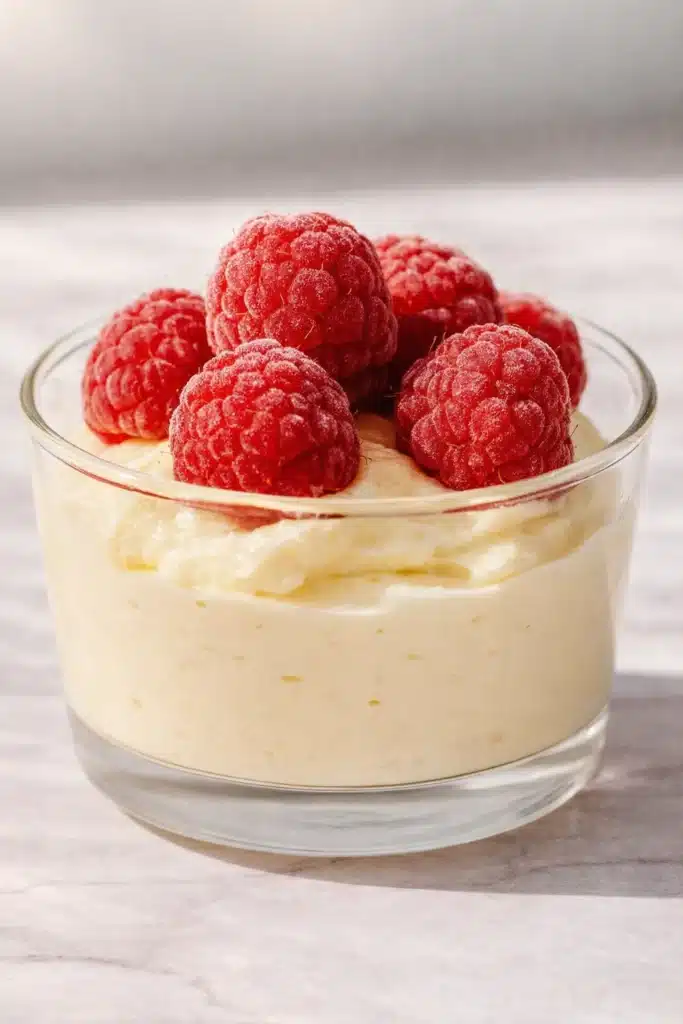
This Greek yogurt dessert proves that quick desserts can still feel special. It’s creamy, tangy, and endlessly flexible for your cravings. Whether you serve it with fruit or enjoy it plain, it’s a small reward at the end of a busy day. For more kitchen inspiration, follow my latest creations on Pinterest and Facebook.
Print
Greek Yogurt Dessert: A Light, Creamy, No-Bake Treat
- Total Time: 10–15 minutes
- Yield: 1–2 servings 1x
- Diet: Vegetarian
Description
A creamy, light, cheesecake-inspired Greek yogurt dessert that takes just minutes to prepare. With no baking and minimal ingredients, this tangy, protein-rich treat makes the perfect easy dessert or midday snack.
Ingredients
1 cup vanilla Greek yogurt (preferably full-fat)
2 tablespoons almond milk (or any milk)
1 tablespoon instant cheesecake pudding mix
Instructions
1. Whisk Greek yogurt and pudding mix together until smooth and creamy.
2. Add milk to adjust consistency if needed.
3. Refrigerate for several hours until it firms up.
4. Serve chilled, optionally topped with fruit or nuts.
Notes
Use thick Greek-style yogurt for best results.
Mix vigorously to eliminate lumps from pudding mix.
Add more pudding mix for a firmer texture.
Gel food coloring can be added without affecting consistency.
- Prep Time: 10 minutes
- Cook Time: 0 minutes
- Category: Dessert
- Method: No-Bake
- Cuisine: American
Nutrition
- Serving Size: 1 cup
- Calories: 150–200
- Sugar: 30–35 g
- Sodium: 50 mg
- Fat: 0–3 g
- Saturated Fat: 1 g
- Unsaturated Fat: 2 g
- Trans Fat: 0 g
- Carbohydrates: 30–35 g
- Fiber: 0 g
- Protein: 5–8 g
- Cholesterol: 5 mg
What is. Cheesecake pudding mix in Australia? Could Philadelphia cream cheese be used as a substitute?
Yes, if you can’t find cheesecake pudding mix in Australia, you can use Philadelphia cream cheese for a similar cheesecake flavor. Just keep in mind it won’t thicken the dessert the same way, so you may want to reduce the milk or chill it a little longer before serving.