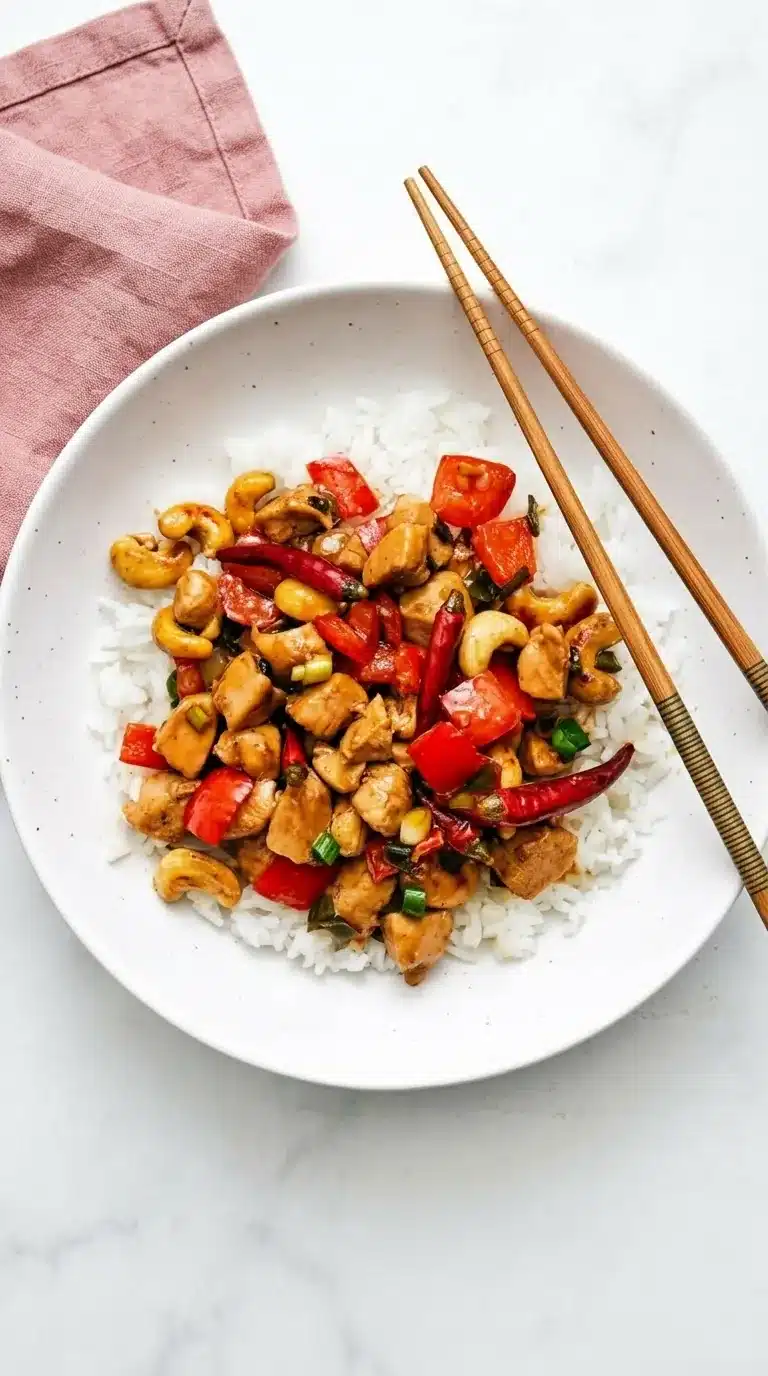
This easy Kung Pao Chicken is a flavorful 30-minute lunch recipe featuring tender chicken, crunchy peanuts or cashews, dried chilies, and a light, glossy sauce with savory, tangy, sweet, spicy, and slightly numbing Sichuan flavors.
Some lunches need a little spark, and Kung Pao Chicken brings plenty without keeping you in the kitchen all afternoon. The chicken turns tender and golden, while toasted nuts add crunch. Meanwhile, ginger, garlic, dried chilies, and Sichuan peppercorns fill the kitchen with a warm, savory aroma that makes lunchtime feel far more exciting.
Table of Contents
What Is Kung Pao Chicken?
Kung Pao Chicken is a Sichuan-style stir-fry that combines chicken, dried red chilies, Sichuan peppercorns, aromatics, and nuts. The sauce tastes savory, tangy, lightly sweet, and spicy.
However, this dish should not swim in sauce. Instead, the sauce lightly coats each piece of chicken with a glossy finish. Sichuan peppercorns also add their signature gentle numbing sensation.
This recipe makes 4 servings. Prep takes 15 minutes, cooking takes 15 minutes, and the whole meal comes together in about 30 minutes.
Why You’ll Love This Kung Pao Chicken Recipe
First, Kung Pao Chicken works beautifully for a quick lunch because it cooks fast. Also, one pan handles nearly all the cooking, so cleanup stays manageable.
The combination of juicy chicken, crisp bell pepper, toasted nuts, and glossy sauce gives every bite contrast. Meanwhile, you can easily control the heat by changing how you prepare the dried chilies.
Per serving, this recipe contains about 363 calories, 13 g carbohydrates, 19 g protein, and 27 g fat. It also contains 1 g fiber and 6 g sugar.

Kung Pao Chicken Ingredients
You only need a few groups of ingredients. Therefore, I like to measure everything before heating the pan because the stir-fry moves quickly once cooking starts.
Chicken and Marinade Ingredients
Use 1½ pounds boneless skinless chicken breast, cut into bite-size pieces. Then add 1 tablespoon tamari or soy sauce, 1 tablespoon dry sherry or Shaoxing wine, and 1 teaspoon arrowroot powder or cornstarch.
The starch helps the chicken develop a tender texture. Meanwhile, the soy sauce and wine give the meat savory depth before it reaches the pan.
Kung Pao Sauce Ingredients
Whisk together 3 tablespoons tamari or soy sauce, 2 tablespoons water, 1 tablespoon dry sherry or Shaoxing wine, 1 tablespoon rice vinegar, 1 tablespoon honey, and 1 teaspoon toasted sesame oil.
Then whisk in 2 teaspoons arrowroot powder or cornstarch. This small amount thickens the sauce enough to cling lightly to the chicken.
Stir-Fry Ingredients
You need 3 tablespoons avocado oil, 1 chopped red bell pepper, 8 dried red chilies, 4 garlic cloves, and 1 tablespoon finely grated fresh ginger.
Also add 1 teaspoon Sichuan peppercorn powder, 4 sliced green onions, and ½ cup raw peanuts or cashews. Peanuts give the dish a more traditional character, while cashews taste buttery and rich.
Ingredient Substitutions and Variations
This Kung Pao Chicken recipe leaves room for practical swaps. Therefore, you can work with what your grocery store carries without losing the core flavors.
Chicken Breast or Chicken Thighs
Chicken breast cooks quickly and keeps the dish light. However, boneless chicken thighs give you a richer, more tender bite.
Cut either option into similar-size pieces. As a result, every piece cooks at roughly the same speed.
Soy Sauce, Tamari, or Coconut Aminos
Regular soy sauce works well here. Meanwhile, tamari offers another option when you want a gluten-free product, as long as you check the package.
You can also use coconut aminos. However, its flavor tastes sweeter, so adjust the honey if needed.
Shaoxing Wine or Dry Sherry
Shaoxing wine adds classic depth to Kung Pao Chicken. However, dry sherry makes a convenient substitute and still brings a warm, rounded flavor.
Rice Vinegar or Chinese Black Vinegar
Rice vinegar gives the sauce a clean tang. Alternatively, Chinese black vinegar adds a deeper, more complex sour note.
Peanuts or Cashews
Peanuts provide the traditional crunch. However, cashews work wonderfully when you want something a little softer and buttery.
How to Adjust the Spice Level
The great thing about homemade Kung Pao Chicken is that you control the fire. So, you do not need to accept whatever spice level comes out of a restaurant kitchen.
How to Use Dried Red Chilies
For minimal heat, keep all 8 dried chilies whole. They will still add aroma and flavor without releasing as much heat.
For mild heat, cut open 2 or 3 chilies and include the seeds. Then, for a hotter dish, slice more chilies before adding them to the pan.
Sichuan Peppercorns and Spicy Alternatives
Sichuan peppercorn powder brings a citrusy aroma and gentle numbing feeling rather than simple chili heat. Therefore, it plays a different role from dried red chilies.
If you cannot find the peppercorn powder or dried chilies, try sambal oelek, red pepper flakes, chili powder, or cayenne. Start small, then add more according to your taste.
How to Make Kung Pao Chicken
Have everything ready before you turn on the heat. Stir-frying moves quickly, so a little prep makes the cooking process calm and easy.
Marinate the Chicken
First, combine the chicken with 1 tablespoon soy sauce, 1 tablespoon sherry or Shaoxing wine, and 1 teaspoon arrowroot powder or cornstarch.
Then toss well and let the chicken sit while you prepare everything else.
Prepare the Kung Pao Sauce
Next, whisk the soy sauce, water, wine, rice vinegar, honey, sesame oil, and starch in a small bowl.
Keep the sauce nearby. Also, stir it again right before adding it because the starch can settle at the bottom.
Toast the Peanuts or Cashews
Heat a dry wok or large sauté pan over medium-high heat. Then add the nuts and toast them for about 1 minute while stirring continuously.
Once they smell nutty and lightly toasted, transfer them to a plate.
Stir-Fry the Chicken
Next, heat 2 tablespoons avocado oil in the pan. Add the chicken and stir-fry for 3 to 4 minutes.
Cook until the pieces turn lightly brown and cook through. Then transfer the chicken to a clean plate.
Cook the Bell Pepper, Chilies, and Aromatics
Add the remaining tablespoon of avocado oil if the pan looks dry. Then add the bell pepper, dried chilies, garlic, ginger, and Sichuan peppercorn powder.
Stir-fry for 3 to 4 minutes. Meanwhile, keep everything moving so the garlic and spices stay fragrant rather than scorching.
Add the Sauce and Return the Chicken
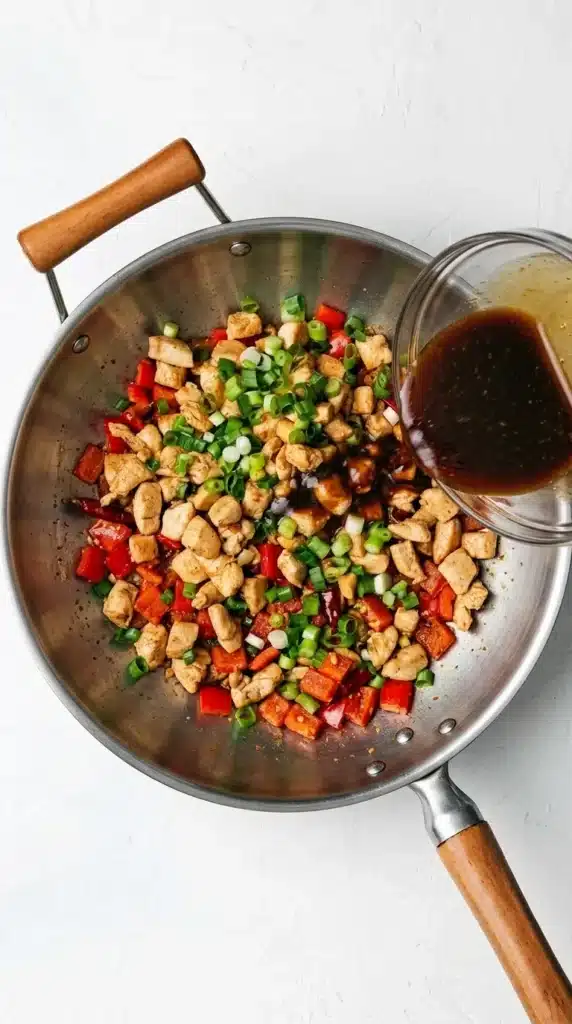
Stir the prepared sauce again, then pour it into the pan. Immediately return the cooked chicken and add the sliced green onions.
Cook for another 1 to 2 minutes. As a result, the sauce will turn glossy and lightly thicken around the chicken.
Finish With Green Onions and Toasted Nuts
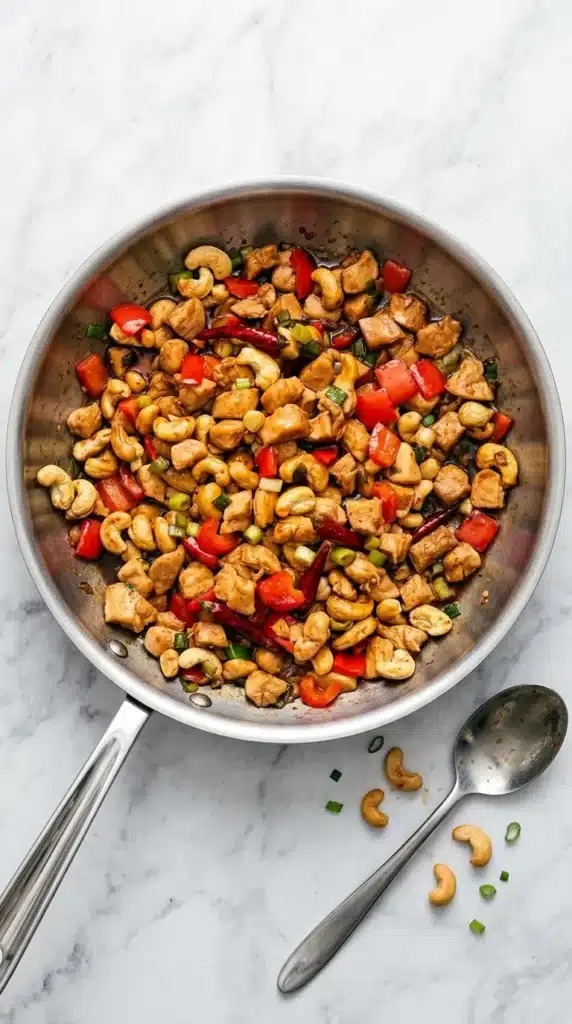
Remove the pan from the heat. Then stir in the toasted peanuts or cashews.
Serve the Kung Pao Chicken right away while the nuts still have plenty of crunch.
Tips for the Best Kung Pao Chicken
A good stir-fry depends more on timing than complicated technique. Therefore, these small details can make a noticeable difference.
Cut the Chicken Into Even Pieces
Cut the chicken into similar bite-size pieces. That way, the smaller pieces will not dry out while larger ones finish cooking.
Cook the Chicken Over High Heat
Use medium-high to high heat and let the pan get properly hot. As a result, the chicken browns instead of slowly simmering in its juices.
Avoid Overcooking the Chicken
Remove the chicken once it cooks through. Then return it only briefly when you add the sauce.
Chicken thighs offer extra flexibility here. However, chicken breast stays tender when you watch the cooking time closely.
Keep the Sauce Light and Glossy
Kung Pao Chicken should have a light coating rather than a pool of thick sauce. Therefore, cook the final sauce only until it turns glossy and clings to the ingredients.
Adjust the Chilies to Your Preferred Heat Level
Keep the chilies whole for less heat. Alternatively, cut a few open when you want a stronger kick.
I usually start gently because you can add heat at the table. Taking it away after dinner starts feels much harder.
What to Serve With Kung Pao Chicken
You can serve this stir-fry alone for a lighter lunch. However, rice, vegetables, or lettuce cups turn it into a fuller meal.
White or Fried Rice
Steamed white rice catches the tangy, savory sauce beautifully. Meanwhile, fried rice makes the meal more filling and adds another layer of texture.
Bok Choy and Other Vegetables
Bok choy pairs especially well with the bold sauce. Also, broccoli, green beans, snap peas, or simply cooked greens make useful sides.
Lettuce Cups
For a crisp option, spoon the warm chicken into sturdy lettuce leaves. The cool lettuce contrasts nicely with the spicy chicken and toasted nuts.
How to Store and Reheat Kung Pao Chicken
Leftovers make an easy lunch the next day. However, cool the food before storing it and keep it covered.
How to Refrigerate Leftovers
Place cooled Kung Pao Chicken in an airtight container. Then refrigerate it for 3 to 4 days.
Keep leftover rice in its own container when possible. As a result, the chicken and sauce keep their texture better.
How to Freeze Kung Pao Chicken
Transfer cooled leftovers to a freezer-safe container and freeze for up to 3 months.
Then thaw the container overnight in the refrigerator before reheating.
How to Reheat Without Drying Out the Chicken
Warm leftovers gently in a skillet over medium-low heat. Add a small splash of water if the sauce looks too thick.
Then stir only until the chicken becomes hot. Avoid extended cooking because chicken breast can dry out quickly.
For more everyday recipe ideas and kitchen inspiration, you can also follow Kai Recipes on Pinterest and Facebook.
Frequently Asked Questions
What is in a kung pao chicken?
Kung Pao Chicken usually combines diced chicken, dried chilies, Sichuan peppercorns, peanuts, aromatics, and a savory sauce. This version also adds red bell pepper, green onions, ginger, garlic, honey, vinegar, and sesame oil.
Is Kung Pao very spicy?
It can taste spicy, but you control the heat. For a gentler version, keep the dried chilies whole. However, slicing the chilies and adding their seeds increases the heat.
Is Kung Po like sweet and sour?
Not quite. Kung Pao Chicken has sweet and tangy notes, but soy sauce, chilies, aromatics, sesame oil, and Sichuan peppercorns give it a more savory, spicy, and slightly numbing flavor.
Is kung pao chicken healthy?
It can fit into a balanced meal, depending on your dietary needs and serving size. This recipe provides about 363 calories and 19 g protein per serving. Also, serving it with vegetables can add more fiber and variety.
More Such Recipes
- spicy chili crisp chicken stir-fry
- easy chicken zucchini stir-fry
- super easy chicken lo mein
- Asian-inspired honey garlic chicken
- easy Thai red curry chicken
- Bang Bang chicken bowl
Final Thoughts
Kung Pao Chicken gives you a lot of flavor from a short session at the stove. You get tender chicken, crisp pepper, crunchy nuts, fragrant ginger and garlic, plus that unmistakable tingle from Sichuan peppercorns.
More importantly, you can shape the recipe around your lunch table. Keep the chilies whole for gentle heat, slice a few for extra fire, or swap chicken thighs for an even juicier bite. Then spoon it over rice and enjoy it while the sauce still shines.
Kung Pao Chicken : Amazing Easy 30-Minute Recipe
Description
Easy Kung Pao Chicken is a 30-minute Sichuan-style lunch with tender chicken, crunchy cashews or peanuts, dried chilies, and a light glossy sauce with savory, tangy, sweet, spicy, and slightly numbing flavors.
Ingredients
- Chicken and Marinade:
- 1 1/2 lb boneless skinless chicken breast, cut into bite-size pieces
- 1 tbsp tamari or soy sauce
- 1 tbsp dry sherry or Shaoxing wine
- 1 tsp arrowroot powder or cornstarch
- Kung Pao Sauce:
- 3 tbsp tamari or soy sauce
- 2 tbsp water
- 1 tbsp dry sherry or Shaoxing wine
- 1 tbsp rice vinegar
- 1 tbsp honey
- 1 tsp toasted sesame oil
- 2 tsp arrowroot powder or cornstarch
- Stir-Fry:
- 3 tbsp avocado oil
- 1 red bell pepper, seeded and chopped
- 8 dried red chilies, kept whole or partly sliced for more heat
- 4 garlic cloves
- 1 tbsp finely grated fresh ginger
- 1 tsp Sichuan peppercorn powder
- 4 green onions, sliced
- 1/2 cup raw cashews or peanuts
Instructions
- Mix the chicken with 1 tbsp tamari or soy sauce, 1 tbsp dry sherry or Shaoxing wine, and 1 tsp arrowroot powder or cornstarch. Let it sit while you prepare the sauce.
- Whisk together 3 tbsp tamari or soy sauce, 2 tbsp water, 1 tbsp dry sherry or Shaoxing wine, 1 tbsp rice vinegar, 1 tbsp honey, 1 tsp toasted sesame oil, and 2 tsp arrowroot powder or cornstarch. Set aside.
- Toast the cashews or peanuts in a dry wok or large sauté pan over medium-high heat for about 1 minute, stirring continuously. Remove the nuts from the pan.
- Heat 2 tbsp avocado oil in the wok or pan. Add the chicken and stir-fry for 3 to 4 minutes until lightly browned and fully cooked. Transfer the chicken out of the pan.
- Add the remaining 1 tbsp avocado oil if needed. Stir-fry the red bell pepper, dried red chilies, garlic, ginger, and Sichuan peppercorn powder for 3 to 4 minutes.
- Stir the prepared sauce again and pour it into the pan. Return the chicken to the pan and add the sliced green onions.
- Cook for another 1 to 2 minutes until the sauce turns glossy and slightly thickens.
- Remove from the heat and stir in the toasted cashews or peanuts. Serve alone or with white or fried rice.
Notes
For minimal heat, leave the dried chilies whole. For mild heat, cut open 2 to 3 chilies and include their seeds. Slice more chilies for greater heat.
If Sichuan peppercorn powder or dried red chilies are unavailable, use sambal oelek, chili powder, red pepper flakes, or cayenne for heat.
Chicken thighs can replace chicken breast for a more tender result.
Cornstarch and arrowroot powder are interchangeable.
Dry sherry can replace Shaoxing wine.
Chinese black vinegar can replace rice vinegar.
Regular soy sauce can replace dark soy sauce. Tamari or coconut aminos offer alternatives when avoiding gluten. Check product labels when needed.
Peanuts are the traditional nut option, while cashews also work well.
You can use a regular frying pan instead of a wok.
Serve with white or fried rice, bok choy or other vegetables, or lettuce cups.
Refrigerate cooled leftovers in an airtight container for 3 to 4 days.
Freeze cooled leftovers in a freezer-safe container for up to 3 months. Thaw overnight in the refrigerator before reheating.